IFR STD 7000 ARINC Bus Controller
The Cobham STD 7000 ARINC Bus Controller is a versatile instrument designed for simulating, testing, and troubleshooting ARINC 429 data buses. It supports single or multi-channel operation and provides comprehensive control over ARINC bus parameters, message injection, error simulation, and data monitoring.
- Model
- Cobham / Aeroflex / IFR STD 7000
- Calibration
- Available on request
- Price
- $3,500
- Status
- In stock
- RFQ ref
- STD 7000
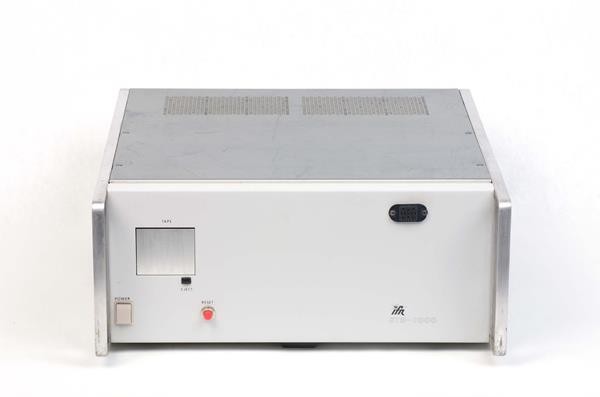
This unit
The Cobham (formerly Aeroflex/IFR) STD 7000 ARINC Bus Controller is a sophisticated instrument designed for simulating, testing, and troubleshooting avionics systems that utilize ARINC 429 and ARINC 453 data buses. It functions as a key component within the Standard Digital Interface System (SDIS), which typically includes the STD-7000 Bus Controller, an operator terminal (CRT display, interface, and keypad), and potentially other auxiliary IFR test equipment. This system is engineered to generate and receive ARINC bus traffic, enabling operators to verify the integrity of the system under test. The STD 7000 works with controlling serial bus communication within ARINC 700 series avionics test systems, offering a clear and straightforward method for monitoring and controlling ARINC bus activity.
Technical Specifications ARINC Bus Interfaces:
- ARINC 429: Six (6) programmable high/low speed I/O buses. * Supports standard ARINC 429 data rates: 12.5 kHz (low speed) and 100 kHz (high speed). * ARINC 429 specifies a point-to-point, simplex architecture with a single transmitter and up to 20 receivers on a single wire pair. * Data is transmitted in a Return-to-Zero (RZ) format, with HIGH state (+10V differential) and LOW state (-10V differential). * Requires a 78-ohm shielded twisted-pair cable, with the shield grounded at junctions and ends. * Each ARINC 429 word is a 32-bit sequence, including a parity bit and the Sign/Status Matrix (SSM).
- ARINC 453: Three (3) programmable very high-speed I/O buses. * ARINC 453 is a higher-speed data bus standard for avionics, often used for systems requiring faster data throughput than ARINC 429. Other Interfaces:
- IFR I/O Bus: One (1) bus for the interface of auxiliary IFR test equipment.
- IEEE Standard 488-1978 (GPIB): One (1) bus for the interface of an external ATE Controller.
- EIA RS232C: One (1) bus for the interface of the Operator Terminal. **System Components (Standard Digital Interface System
SDIS):**
- STD-7000 Bus Controller: The core processing unit for managing ARINC bus communications.
- Operator Terminal: Typically comprises a CRT Display, CRT Interface, and Numeric Keypad for user interaction and data monitoring. Functionality:
- Generates and receives ARINC 429/453 bus traffic.
- Monitors and controls ARINC bus activity.
- Designed for ARINC 700 series avionics test systems.
- Supports simulation of ARINC bus traffic and testing of system responses.
- Provides data monitoring and message injection capabilities (inferred from short description and general ARINC controller functions).
- Error simulation capabilities (inferred from short description and general ARINC controller functions).
Physical Characteristics * The STD-7000 system is comprised of the Bus Controller and an Operator Terminal, which includes a CRT Display, CRT Interface, and Numeric Keypad.
- Details regarding dimensions, weight, and environmental specifications are not explicitly detailed in the provided search results, but are typically available in the Operation & Maintenance Manual.
Compatibility * Designed for use within ARINC 700 series avionics test systems.
- Can interface with external Automatic Test Equipment (ATE) controllers via the IEEE 488 bus.
- Can interface with auxiliary IFR test equipment via the IFR I/O bus.
Electrical Characteristics * ARINC 429 Signaling: * Balanced differential signaling using twisted pairs. * Nominal voltage levels are typically ±5V differential, resulting in a ±10V signal amplitude. * Return-to-Zero (RZ) format. * Specified rise and fall times to minimize overshoot and ringing.
- Power Requirements: Detailed power requirements are available in the Operation & Maintenance Manual. Why Choose Aumictech for Cobham / Aeroflex / IFR STD 7000 ARINC Bus Controller? At Aumictech, we specialize in supplying high-end avionics test equipment. Whether you need comprehensive ARINC bus simulation, in-depth system testing, or advanced troubleshooting capabilities, our team ensures the Cobham / Aeroflex / IFR STD 7000 ARINC Bus Controller delivers maximum performance for your application.
Cobham / Aeroflex / IFR STD 7000 — Repair & Calibration Service
Aumictech offers NIST-traceable calibration and repair for the Cobham / Aeroflex / IFR STD 7000. Calibration covers I/O channel accuracy per specification, analog output and input calibration to rated accuracy, and functional communication interface test (serial, Ethernet, fieldbus). All calibrations ship with a NIST-traceable certificate. Turnaround is typically 1–3 business days after receipt.
Common Cobham / Aeroflex / IFR STD 7000 faults: blown I/O fuses, failed analog modules, power supply capacitor failure. Common faults include blown I/O protection fuses, failed analog I/O modules, power supply capacitor failure, and serial or Ethernet communication port damage.
Cobham / Aeroflex / IFR STD 7000 price
This Cobham / Aeroflex / IFR STD 7000 is listed at $3,500. Calibration is available separately from $450. Contact us for volume pricing or if you need multiple units.
Cobham / Aeroflex / IFR STD 7000 calibration cost
NIST-traceable calibration for the Cobham / Aeroflex / IFR STD 7000 is $450 (standard — pass/fail certificate and calibration sticker) or $650 (full measured data at every test point, reference standards documented, traceability chain included). Calibration for this instrument covers I/O channel accuracy per specification, analog output and input calibration to rated accuracy, and functional communication interface test (serial, Ethernet, fieldbus). Turnaround is 1 to 3 business days after receipt. See full calibration details →