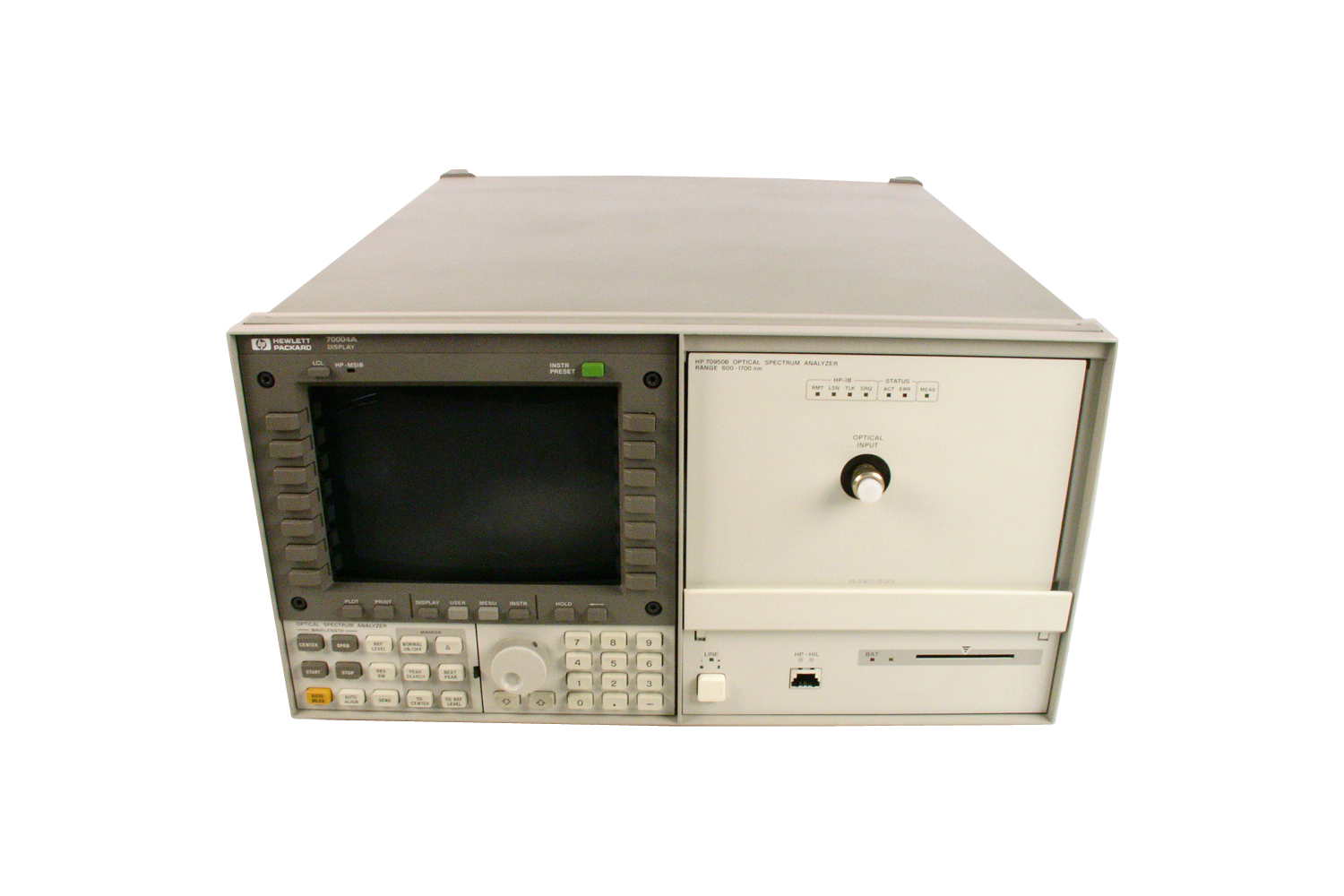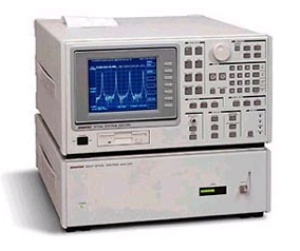
Anritsu MS9780A – Diffraction-Grating Spectrum Analyzer
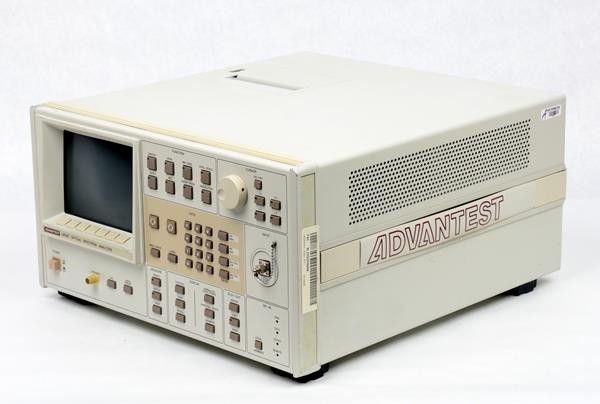
The Anritsu MS9780A is a diffraction-grating spectrum analyzer, designed for high-resolution optical spectrum analysis. It offers excellent wavelength accuracy, high dynamic range, and fast measurement speed. Ideal for evaluating optical devices and systems in research, development, and manufacturing environments.
- Model
- Anritsu MS9780A
- Calibration
- Available on request
- Price · starting from
- $8,500
- Status
- In stock
- RFQ ref
- MS9780A
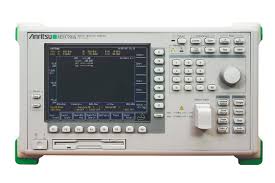
This unit
The Anritsu MS9780A is a diffraction-grating spectrum analyzer engineered for high-resolution optical spectrum analysis across 600 to 1750 nm. It delivers precision measurements in research, development, and manufacturing environments, with particular strength in evaluating optical devices, laser and LED sources, passive component transmission characteristics, and optical amplifier performance metrics including noise figure and gain.
Technical Specifications
Wavelength Performance- Range: 600 to 1750 nm (0.6 to 1.75 µm)
- Accuracy: ±0.3 nm across full range after external light source calibration; ±0.05 nm in the 1.52 to 1.57 µm band post-calibration
- Linearity: ±0.02 nm
- Resolution: 0.07 nm minimum (single-mode fiber); 0.1 nm (graded-index fiber); selectable settings at 0.07×2, 0.1, 0.2, 0.5, 1.0 nm Level Measurement
- Range: –90 to +10 dBm (1250–1600 nm, attenuator off); –65 to +20 dBm (1100–1650 nm, attenuator on)
- Accuracy: ±0.6 dB at 1300/1500 nm (–23 dBm, resolution ≥0.2 nm); ±0.1 dB linearity (0 to –50 dBm)
- Stability: ±0.1 dB at 1550 nm (–23 dBm, ≥0.2 nm resolution, 1 minute)
- Dynamic Range: >70 dB (high-dynamic range mode); 62 dB (normal mode, 1 nm from peak)
- Sensitivity: –90 dBm guaranteed; RMS noise ≤–90 dBm (1.25–1.6 µm)
- Polarization Dependency: ±0.15 dB Measurement Parameters
- Sweep Speed: 0.5 s typical (500 nm sweep width, normal mode, 10 kHz VBW)
- Sweep Width: 0 to 1200 nm
- Maximum VBW: 1 MHz Hardware
- Input Fibers: Single-mode (9.5/125 µm), graded-index (50/125 µm, 62.5/125 µm)
- Display: 6.4 inch color TFT-LCD
- Memory: Two-trace storage (A, B)
- Interfaces: GPIB, RS-232C
Key Features
- WDM communication measurement capability optimized for 1.55 µm band operation
- Superior stability and calibration support for demanding metrology applications
- Multi-fiber input compatibility for diverse test configurations
- Dual-trace memory for comparative analysis
Typical Applications
- Laser diode and LED spectral characterization
- Optical isolator and passive component transmission analysis
- Optical amplifier noise figure and gain assessment
- WDM system validation and component qualification
Specifications
| Parameter | Value |
|---|---|
| Power Range (dBm) | –90 to +10 dBm (1250–1600 nm, attenuator off) |
| –65 to +20 dBm (1100–1650 nm, attenuator on) | Wavelength Range | 600 to 1750 nm |
Frequently Asked Questions
- What does the Anritsu MS9780A measure and what is its wavelength range?
- The MS9780A is a diffraction-grating spectrum analyzer engineered for high-resolution optical spectrum analysis across 600 to 1750 nm. It delivers power measurements from –90 to +10 dBm in the 1250–1600 nm band (attenuator off) and –65 to +20 dBm across 1100–1650 nm with the attenuator engaged, making it well-suited for characterizing optical devices, evaluating component performance, and validating system designs in R&D and manufacturing.
- What is the condition of this used MS9780A, and what has been verified?
- We list this unit as used, reflecting its prior operational history. Before offering it for sale, we perform functional verification to confirm measurement accuracy and instrument responsiveness. We recommend purchasing calibration separately to ensure traceability to NIST standards and confidence in measurement results for your critical applications.
- What does calibration cover for the MS9780A, and how much does it cost?
- Calibration service for the MS9780A is available separately starting at $450 and typically verifies wavelength accuracy and power measurement linearity across the instrument's operating range. Exact calibration scope and turnaround time can be confirmed during the service quote process. Calibrated units come with a certificate of traceability suitable for regulated and quality-sensitive environments.
- What connectivity and control options does the MS9780A support?
- The MS9780A supports GPIB (GP-IB) and optional Ethernet/LAN connectivity for remote control and automated measurement routines. Standard driver support and software integration are available through Anritsu's measurement software ecosystem. We can verify interface compatibility with your existing test infrastructure during the pre-purchase consultation.
Anritsu MS9780A — Repair & Calibration Service
Aumictech offers NIST-traceable calibration and repair for the Anritsu MS9780A. Calibration covers wavelength accuracy at 850, 1310, 1550, and 1625 nm, power level accuracy, resolution bandwidth (RBW) accuracy, and dynamic range verification. All calibrations ship with a NIST-traceable certificate. Turnaround is typically 1–3 business days after receipt.
Common Anritsu MS9780A faults: wavelength motor failure, internal light source dimming, detector sensitivity loss. Common repairs include wavelength motor servicing, internal broadband source replacement, and detector recalibration after extended use.
Anritsu MS9780A price
This Anritsu MS9780A is listed at $8,500. Calibration is available separately from $450. Contact us for volume pricing or if you need multiple units.
Anritsu MS9780A calibration cost
NIST-traceable calibration for the Anritsu MS9780A is $450 (standard — pass/fail certificate and calibration sticker) or $650 (full measured data at every test point, reference standards documented, traceability chain included). Calibration for this instrument covers wavelength accuracy at 850, 1310, 1550, and 1625 nm, power level accuracy, resolution bandwidth (RBW) accuracy, and dynamic range verification. Turnaround is 1 to 3 business days after receipt. See full calibration details →