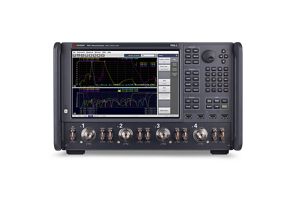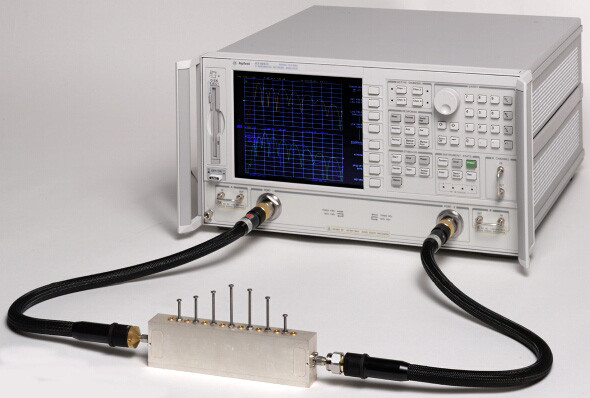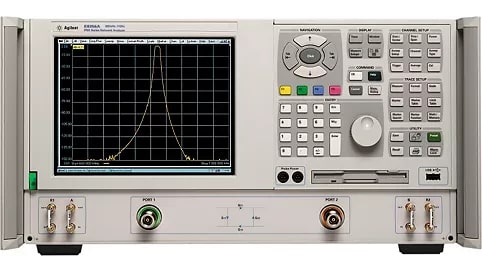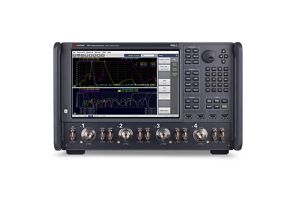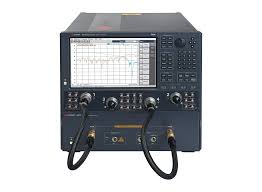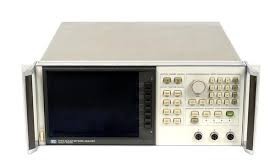
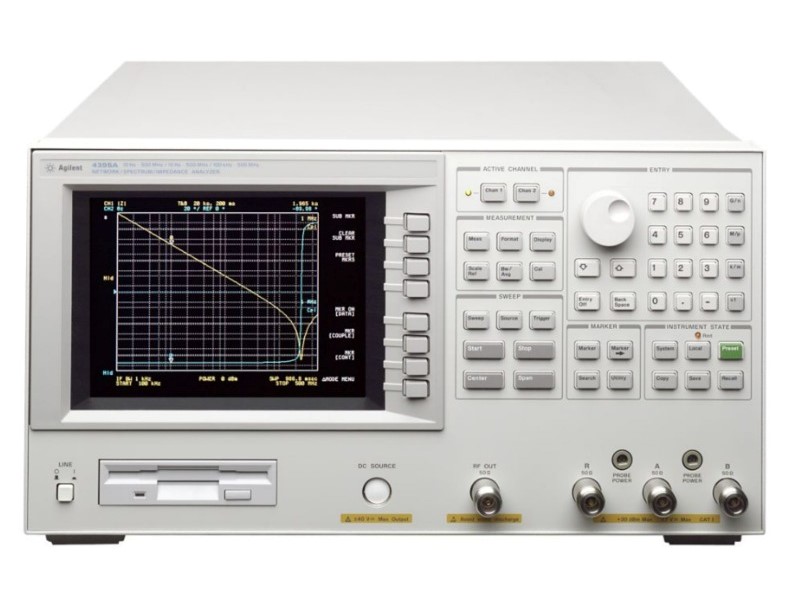
Agilent 4395A Network Spectrum Impedance Analyzer
Agilent 4395A Network Spectrum Impedance Analyzer,"Combines vector network analysis, spectrum analysis, and impedance measurement into a single instrument. Covers 10 Hz to 500 MHz, enabling characterization of RF components, circuits, and systems. Ideal for R&D and production test environments needing comprehensive signal evaluation and frequency domain analysis with high dynamic range."
- Model
- Agilent 4395A
- Calibration
- Available on request
- Price · starting from
- $7,270
- Status
- In stock
- RFQ ref
- 4395A
This unit
The Agilent 4395A Network Spectrum Impedance Analyzer combines vector network analysis, spectrum analysis, and impedance measurement in a single instrument. Operating from 10 Hz to 500 MHz, it delivers 1 mHz frequency resolution and a synthesized source spanning –50 dBm to +15 dBm. The analyzer supports dual-channel color TFT display output and connects via GPIB for automated test integration.
Technical Specifications
Frequency & Source Performance- Frequency range: 10 Hz to 500 MHz
- Frequency resolution: 1 mHz
- Synthesized source: –50 dBm to +15 dBm, 0.1 dB resolution Network Analysis
- Impedance measurement range: 100 kHz to 500 MHz
- Dynamic magnitude accuracy: ±0.05 dB (typical, –10 dB > input ≥ –60 dB)
- Dynamic phase accuracy: ±0.3° (typical, –10 dB > input ≥ –60 dB)
- Absolute amplitude accuracy: ±1.5 dB at –10 dBm input, 10 dB attenuator, f ≥ 100 Hz
- Trace noise: < 0.005 dB rms at 50 MHz, full-scale input –10 dB, IFBW 300 Hz
- Measurement parameters: |Z|, θz, |Y|, θy, R, X, G, B, Cp, Cs, Lp, Ls, Rp, Rs, D, Q, |Γ|, θΓ, Γx, Γy Spectrum Analysis
- Resolution bandwidth: 2 Hz to 5 MHz with selectable steps
- Displayed average noise level: < –120 dBm/Hz (100 kHz ≤ f < 10 MHz); < –133 dBm/Hz (f ≥ 10 MHz)
- Selectivity (60 dB/3 dB): 0
- Spurious response: –110 dBc/Hz at 1 MHz
- FFT DSP acceleration: up to 100× faster narrow-RBW sweeps Impedance Measurement
- Frequency range: 100 kHz to 500 MHz
- Basic accuracy: 3%
- Optional DC source (Option 001): ±40 V, ±20 to ±100 mA Physical & Environmental
- Dimensions: 425 mm W × 235 mm H × 553 mm D
- Weight: 21 kg (typical)
- Operating temperature: 0 °C to 40 °C
- Storage temperature: –20 °C to 60 °C
- Interface: GPIB
- Storage: 1.44 MB floppy disk (LIF or MS-DOS)
Key Features
- Tri-function analysis in one box eliminates multiple instruments
- Color TFT dual-display for parallel measurement monitoring
- 1 mHz resolution for precision frequency characterization
- < 0.005 dB rms trace noise for low-level signal detection
- Programmable via IBASIC and GPIB automation
Typical Applications
- RF component characterization and impedance matching
- Circuit board assembly (CBA) production testing
- Filter and amplifier S-parameter measurement
- Impedance and Q-factor verification across broadband designs
- Spectrum monitoring and EMI/RFI assessment
Compatibility & Integration GPIB connectivity enables integration into automated test systems. Data storage on 1.44 MB floppy supports LIF and MS-DOS formats for test setup archival and program execution via IBASIC.
Specifications
| Parameter | Value |
|---|---|
| Frequency Range | 10 Hz to 500 MHz | Power Range (dBm): '-50 dBm to +15 dBm | Voltage / Current Range: '-20 mA to -100 mA, -40 V to +40 V, +20 mA to +100 mA (DC source option) |
Agilent 4395A — Repair & Calibration Service
Aumictech offers NIST-traceable calibration and repair for the Agilent 4395A. All calibrations are performed to NIST-traceable standards and ship with a certificate. Turnaround is typically 1–3 business days after receipt.
Agilent 4395A price
This Agilent 4395A is listed at $7,270. Calibration is available separately from $450. Contact us for volume pricing or if you need multiple units.
Agilent 4395A calibration cost
NIST-traceable calibration for the Agilent 4395A is $450 (standard — pass/fail certificate and calibration sticker) or $650 (full measured data at every test point, reference standards documented, traceability chain included). Turnaround is 1 to 3 business days after receipt. See full calibration details →