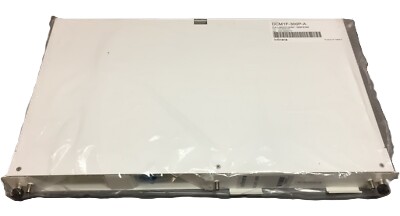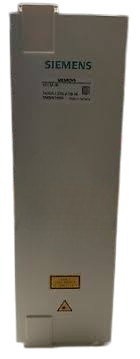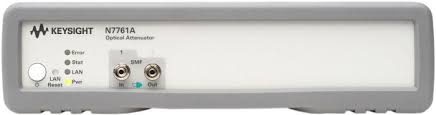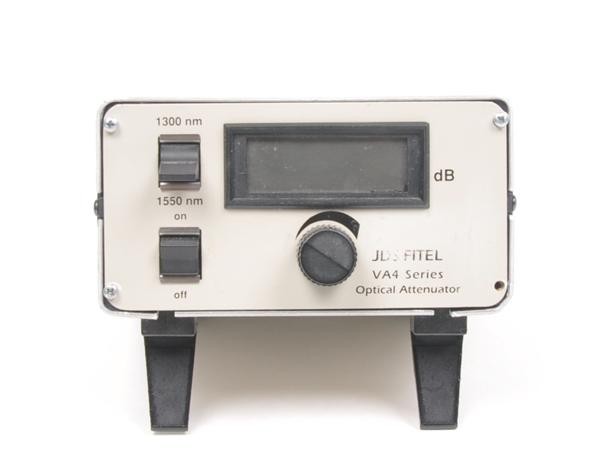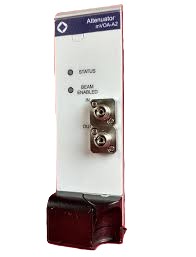
JDSU Tunable Filter (mTBF-A1) / MTBF-A1CH0
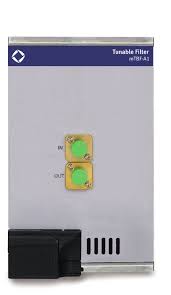
The JDSU Tunable Filter (mTBF-A1) / MTBF-A1CH0 is a tunable bandpass filter designed for selecting specific wavelengths of light in optical systems. It features a compact design and precise wavelength control, making it suitable for applications such as optical channel monitoring, signal routing, and spectral shaping.
- Model
- JDSU MTBF-A1CH0
- Calibration
- Available on request
- Price · starting from
- $4,480
- Status
- In stock
- RFQ ref
- MTBF-A1CH0
This unit
The JDSU Tunable Filter (mTBF-A1) / MTBF-A1CH0 is a tunable bandpass filter engineered for precise wavelength selection in optical systems. It isolates specific wavelengths, suppresses amplified spontaneous emissions (ASE), and enables precise spectral control across the C-band and extended L-band. The filter integrates into the MAP-200 platform - an LXI Class C compliant system - and supports hot-swappable cassette installation without system shutdown.
Its high tuning resolution and low insertion loss make it ideal for optical communications testing, amplifier characterization, BER measurement, and OSNR analysis.
Technical Specifications
- Wavelength Range: 1520 to 1630 nm
- Tuning Resolution: 0.005 nm
- Tuning Speed: > 5 nm/s
- Wavelength Accuracy: ± 0.2 nm
- -3 dB Bandwidth Options: 0.11 nm (Model C), 0.25 nm (Model G), 0.55 nm (Model K)
- Insertion Loss: < 6.0 dB (1520–1610 nm); 45 dB
- Polarization Dependent Loss: < 0.3 dB
- Polarization Mode Dispersion: < 0.3 ps
- Group Delay Variation: 45 dB
- Peak Search Accuracy: < 0.2 dB from output peak power
- Optical Shape: Gaussian
- 3/20 dB Ratio: 0.40 ± 0.05 (Model C); 0.31 ± 0.05 (Models G and K)
Key Features
- Hot-swappable cassette design eliminates downtime during module changes
- Dynamic MAP firmware automatically identifies installed cassettes
- Optional peak search function locates maximum transmission power within tuning range or user-defined local maximum
- Optional 10% tap output for independent power monitoring
- Operating temperature range: 10 to 35°C
Typical Applications
- Optical amplifier characterization
- Bit error rate (BER) testing
- Optical signal-to-noise ratio (OSNR) measurements
- Wavelength-selective signal isolation in optical test systems
Compatibility & Integration Optimized for the JDSU MAP-200 platform. Compliant with CE, CSA/UL/IEC61010-1, and LXI Class C standards when installed in a MAP chassis. Physical dimensions: 8.1 × 13.26 × 37.03 cm; weight: 2.3 kg.
Specifications
| Parameter | Value |
|---|---|
| Wavelength Range | 1520 to 1630 nm |
JDSU MTBF-A1CH0 — Repair & Calibration Service
Aumictech offers NIST-traceable calibration and repair for the JDSU MTBF-A1CH0. Calibration covers attenuation accuracy at 5 or more set values across the full range (0 to rated maximum dB), attenuation linearity, wavelength-dependent attenuation at 1310 nm, 1490 nm, and 1550 nm, insertion loss at minimum attenuation (0 dB position), and polarization-dependent loss (PDL) where applicable. All calibrations ship with a NIST-traceable certificate. Turnaround is typically 1–3 business days after receipt.
Common JDSU MTBF-A1CH0 faults: motor and gear mechanism wear (attenuation steps or loss of smooth control), optical port contamination, EEPROM calibration data corruption. Most common faults are motor or gear mechanism wear on variable attenuators causing attenuation steps or loss of smooth control, optical port contamination reducing dynamic range, and EEPROM calibration data corruption on digitally controlled models.
JDSU MTBF-A1CH0 price
This JDSU MTBF-A1CH0 is listed at $4,480. Calibration is available separately from $450. Contact us for volume pricing or if you need multiple units.
JDSU MTBF-A1CH0 calibration cost
NIST-traceable calibration for the JDSU MTBF-A1CH0 is $450 (standard — pass/fail certificate and calibration sticker) or $650 (full measured data at every test point, reference standards documented, traceability chain included). Calibration for this instrument covers attenuation accuracy at 5 or more set values across the full range (0 to rated maximum dB), attenuation linearity, wavelength-dependent attenuation at 1310 nm, 1490 nm, and 1550 nm, insertion loss at minimum attenuation (0 dB position), and polarization-dependent loss (PDL) where applicable. Turnaround is 1 to 3 business days after receipt. See full calibration details →