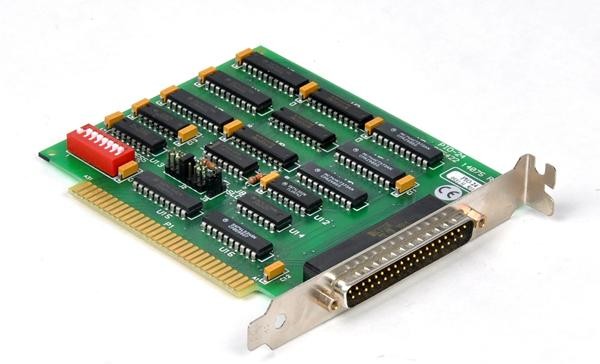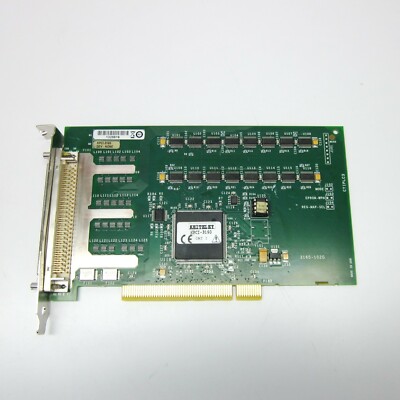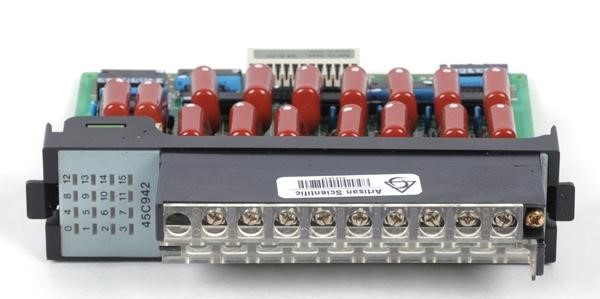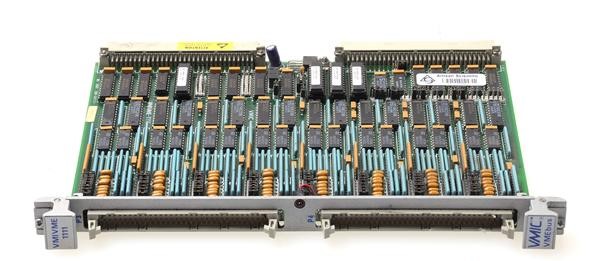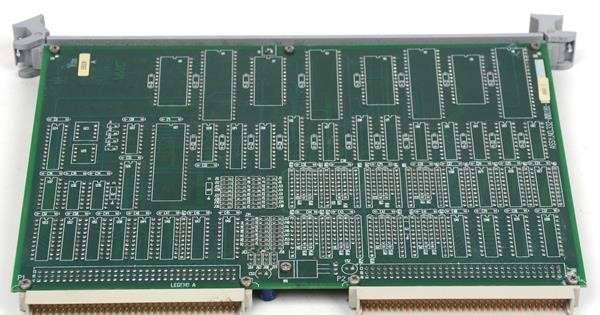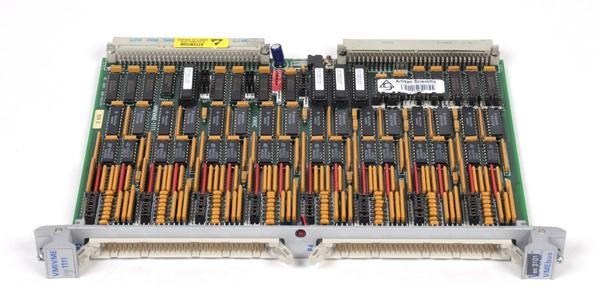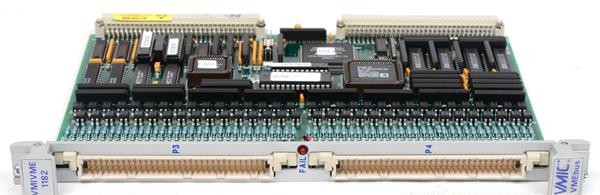
Abaco Systems / VMIC VMIVME-1111-030 64-Bit High-Voltage Digital Input Board
Abaco Systems / VMIC Digital Input Board. Model: VMIVME-1111-030.
- Model
- Abaco Systems / VMIC VMIVME-1111-030
- Calibration
- Available on request
- Price
- $5,499
- Status
- In stock
- RFQ ref
- VMIVME-1111-030
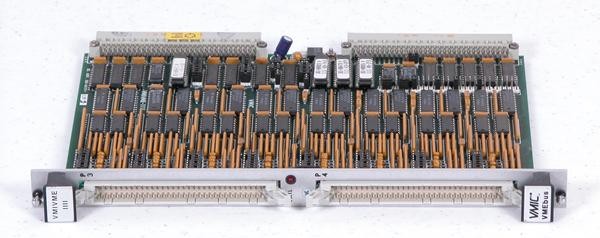
This unit
The Abaco Systems VMIVME-1111-030 is a 64-bit high-voltage digital input board for VMEbus systems, delivering flexible signal monitoring across contact closure, voltage source, current sinking, and differential topologies. Each 32-input group is jumper-selectable, with user-configurable input voltage thresholds spanning 1.25 V to 66 V. The board integrates onboard Built-in-Test logic for rapid fault detection and isolation, supported by a front panel Fail LED indicator.
Technical Specifications
Architecture & Connectivity- VMEbus compliance: ANSI/IEEE STD 1014-1987, IEC 821, IEC 297
- Form factor: Double height Eurocard
- Input channels: 64 differential or high-voltage digital inputs
- Connectors: Dual 64-pin DIN 41612
- Data transfers: 8-, 16-, or 32-bit
- Addressing: Eight independently addressable ports on 8-, 16-, or 32-bit boundaries; one Control and Status Register on 8-bit boundary; thirteen jumpers for unlimited address map selection Input Characteristics
- Input voltage range: 1.25 V to 66 V DC
- Jumper-selectable threshold accuracy: 1% across the entire 66 V range (typical)
- Input impedance: 33 kΩ (single-ended and differential) Differential Signals
- Common-mode input voltage: −30 V to +66 V
- Input sensitivity: ±100 mV over common-mode range −7 V to +12 V
- RS422/RS485-compatible differential line receivers with ±7 V noise immunity Signal Conditioning & Protection
- Open circuit state: Jumper-selectable logic zero or logic one
- Input filter option: Series RC terminator or 0.14 ms time constant filter
- Surge protection: ANSI/IEEE STD C37.90.1-1982 compliance
Key Features
- Supports contact closure, voltage source, current sinking, and differential signal monitoring
- Accommodates mechanical switch contacts, relay contacts, electronic switching circuits, standard logic circuits, and Opto 22 type signal conditioning modules
- Front panel Fail LED for BIT status visibility
- Flexible jumper configuration for independent 32-input group operation
Compatibility & Integration This board integrates directly into VMEbus backplanes and operates across industrial voltage environments from 1.25 V to 66 V, making it suitable for mixed-signal acquisition in automated control and instrumentation systems.
Specifications
| Parameter | Value |
|---|---|
| Voltage / Current Range | 1.25 V to 66 V DC |
Abaco Systems / VMIC VMIVME-1111-030 — Repair & Calibration Service
Aumictech offers NIST-traceable calibration and repair for the Abaco Systems / VMIC VMIVME-1111-030. Calibration covers per-channel threshold accuracy, input leakage current, logic level high/low margins, and signal timing verification. All calibrations ship with a NIST-traceable certificate. Turnaround is typically 1–3 business days after receipt.
Common Abaco Systems / VMIC VMIVME-1111-030 faults: ESD-damaged input protection, failed driver ICs, connector pin damage. Most failures involve ESD-damaged input protection circuitry, failed logic driver ICs, or mechanical connector pin damage. Board-level component replacement is standard practice.
Abaco Systems / VMIC VMIVME-1111-030 price
This Abaco Systems / VMIC VMIVME-1111-030 is listed at $5,499. Calibration is available separately from $450. Contact us for volume pricing or if you need multiple units.
Abaco Systems / VMIC VMIVME-1111-030 calibration cost
NIST-traceable calibration for the Abaco Systems / VMIC VMIVME-1111-030 is $450 (standard — pass/fail certificate and calibration sticker) or $650 (full measured data at every test point, reference standards documented, traceability chain included). Calibration for this instrument covers per-channel threshold accuracy, input leakage current, logic level high/low margins, and signal timing verification. Turnaround is 1 to 3 business days after receipt. See full calibration details →