
Lecroy 102 vs Agilent E4422A
Side-by-side comparison · Aumictech Labs
At a glance
AI-generated analysis
Technical differences
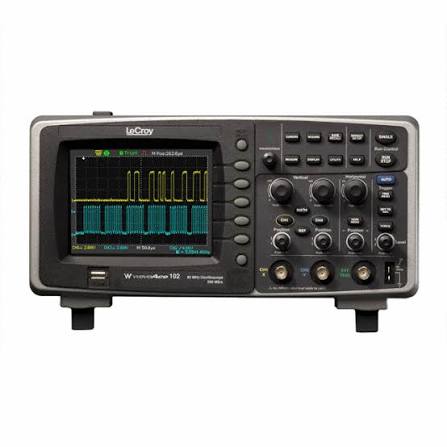
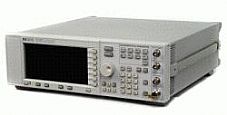
These instruments serve fundamentally different purposes in test and measurement. The LeCroy 102 is a basic digital oscilloscope with 60 MHz bandwidth and 2 channels, designed to capture and display voltage waveforms over time. It excels at observing signal characteristics, timing relationships, and troubleshooting analog circuits. The Agilent E4422A is a vector signal generator that produces RF signals across a massive 250 kHz to 4 GHz frequency range with output power spanning from -130 dBm to +20 dBm. Rather than measuring signals, it generates them with precise amplitude and frequency control.
The performance gap between these instruments is substantial. The Agilent operates across microwave frequencies where the LeCroy's 60 MHz bandwidth becomes nearly irrelevant. The LeCroy's 2-channel configuration limits simultaneous measurements, while the Agilent's signal generation capability requires no measurement channels at all. For applications requiring RF and microwave signal sources, the Agilent's 4 GHz upper limit opens possibilities in cellular, satellite, and wireless testing that the LeCroy cannot support. Conversely, the LeCroy provides real-time waveform visualization that a signal generator cannot offer. Both operate from standard AC mains (100-240 VAC), but the Agilent's complexity and frequency range demand substantially more sophisticated internal architecture.
Choose the LeCroy 102 if:
- You need to measure and troubleshoot analog circuits, power supplies, or audio frequency signals up to 60 MHz
- You require a portable, straightforward tool for basic waveform capture and signal verification in field service or education environments
- Your budget strongly constrains instrument investment and you need only observation capabilities, not signal generation
Choose the Agilent E4422A if:
- You must generate RF and microwave test signals for cellular, wireless, or satellite communication equipment testing
- Your applications require frequency coverage from kilohertz into the gigahertz range with precise amplitude control
- You need a vector signal generator for modulated signal testing or complex RF application development
Our take
These instruments are not alternatives. Choosing between them depends entirely on whether your work requires measuring existing signals (LeCroy) or creating test signals (Agilent). For most general electronics technicians and educators, the LeCroy 102 delivers practical value at reasonable cost. However, if your work touches RF and wireless domains at any level, the Agilent becomes essential despite its higher price. The Agilent's 4 GHz capability and -130 dBm to +20 dBm power range represent capabilities the LeCroy cannot approach. Budget your purchase around actual application needs rather than price alone.
Analysis generated by Claude AI. Verify specs with manufacturer datasheets before purchasing.
Full specification comparison
1 spec differ between these two instruments (highlighted in yellow).
| Specification | Lecroy 102 | Agilent E4422A |
|---|---|---|
| Frequency Range | 60 MHz | Voltage / Current Range: 100–240 VAC | 250 kHz to 4 GHz | Power Range (dBm): '-130 dBm to +20 dBm | Voltage / Current Range: 100-240 VAC, 50/60 Hz |
Interested in the Lecroy 102?
View Lecroy 102Interested in the Agilent E4422A?
View Agilent E4422ACompare other instruments using the Compare button on any product page.