
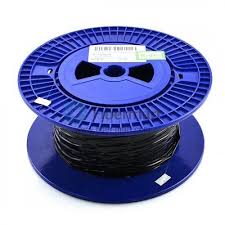
Corning ClearCurve OM5 Multimode Bare Optical Fiber
ClearCurve OM5 is the wide-band multimode fiber optimized across the 850-950 nm window for short wavelength division multiplexing (SWDM). It is the current standard for high-density and AI data center builds targeting 400G and 800G on existing fiber infrastructure, and Corning rates the ClearCurve multimode line to support 800G.
- Standard
- IEC A1-OM5 (50/125 µm, wide-band)
- EMB @ 850 nm
- ≥ 4700 MHz·km
- Wide band
- 850–950 nm (optimized for SWDM)
- 10G reach @ 850 nm
- 400 m
OM5 meets IEC A1-OM5 and is backward compatible with OM4 — 10G reaches 400 m (within the OM4 550 m spec), 40G and 100G reach the same distances as OM4. The differentiation is in SWDM operation: OM5 supports SWDM4, which runs four wavelengths (roughly 850, 880, 910, 940 nm) on one fiber, each carrying a 100G lane for 400G aggregate on a single fiber pair. SWDM also reduces port and fiber counts in switching infrastructure by 4x compared to parallel SR4 approaches.
AI infrastructure — GPU-to-GPU interconnects, scale-out networks for large language model training — is driving the most aggressive fiber density requirements in data center history. OM5 with SWDM enables 800G on a duplex fiber pair at distances up to approximately 50-150 m depending on the transceiver implementation. Corning has published specifications showing 800G compatibility on ClearCurve OM5.
For any new data center build where the design life extends past 5 years or where AI workloads are part of the compute roadmap, OM5 is the correct fiber choice. The cost premium over OM4 is modest, and the single-fiber-pair 400G/800G capability it enables eliminates the need for 8-fiber or 16-fiber trunk upgrades.
Specifications
| Standard | IEC A1-OM5 (50/125 µm, wide-band) |
|---|---|
| EMB @ 850 nm | ≥ 4700 MHz·km |
| Wide band | 850–950 nm (optimized for SWDM) |
| 10G reach @ 850 nm | 400 m |
| 100G reach (100GBASE-SR4) | 150 m |
| 400G reach (SWDM4 on 1 fiber) | 150 m (varies by transceiver) |
| 800G rated | Yes (Corning ClearCurve OM5) |
Typical Applications
- AI data center scale-out fabric at 400G and 800G
- High-density hyperscale data center horizontal cabling
- GPU cluster interconnect and high-bandwidth compute fabrics
- Any new build where the upgrade path to 800G must be preserved
Why Order Corning Fiber from Aumictech?
We source directly from the Corning authorized channel. Every spool ships with documentation, including reel ID and fiber code.
0.5 km to 1,000 km on a single order. Mix lengths across spools. Choose FC, SC, or LC connectors per spool end, or leave ends bare.
Certificate of compliance and OTDR test data available on request. Required for carrier acceptance testing and network documentation.
Continental US next-day and two-day air available. International shipping on request. Most orders confirmed within one business day.
Frequently Asked Questions
Is OM5 backward compatible with OM4 transceivers and patch cables?
Yes. OM5 meets all OM4 requirements for the 850 nm window. An OM4 VCSEL-based transceiver running on OM5 performs the same as on OM4. The OM5 improvement is visible only when using SWDM transceivers that use the additional 880, 910, and 940 nm wavelengths. You can install OM5 now and add SWDM transceivers later.
What is SWDM and how does it differ from parallel optics?
SWDM (short wavelength division multiplexing) puts multiple wavelengths on a single 50/125 µm fiber, allowing 4x100G (400G) on one duplex pair. Parallel optics (SR4, SR8) uses one fiber per lane — 400GBASE-SR8 needs 8 transmit and 8 receive fibers (16 total). SWDM reduces fiber count by 8x for 400G links, which matters in dense trunk cable routing. The tradeoff is transceiver cost: SWDM transceivers are more complex. For trunk cables over 50 m, SWDM is the cost-effective answer.
Why is OM5 the preferred fiber for AI data centers?
AI training clusters run all-to-all communication patterns where every GPU must reach every other GPU with minimum latency. The port count scales quadratically with GPU count — a 10,000-GPU cluster needs fiber connections for every pair. OM5 with SWDM delivers 800G on a single duplex pair, reducing the number of fibers in each trunk cable by 8x compared to 100G-per-fiber approaches. Fewer fibers means smaller cables, lower conduit fill, and less physical infrastructure to manage as GPU counts increase.