
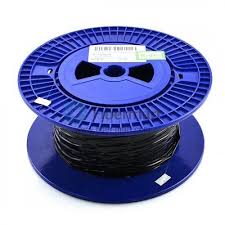
Corning SMF-28e Bare Optical Fiber
SMF-28e was the first Corning single-mode fiber to eliminate the water-peak attenuation spike in the 1360-1460 nm region, using Corning NexCor glass processing. That change opened up the full spectrum between 1260 nm and 1625 nm and made 16-channel CWDM practical on a single fiber.
- ITU-T standard
- G.652.C
- Technology
- NexCor glass processing
- Mode field diameter
- 9.2 ± 0.4 µm @ 1310 nm
- Coating diameter
- 242 ± 5 µm
Compliant with ITU-T G.652.C, SMF-28e keeps the same 9.2 µm mode field diameter and 242 µm coating as the original SMF-28, making it a direct drop-in replacement in any system or splice that called for SMF-28. The difference is the E-band: attenuation at 1383 nm is 0.4 dB/km or below, versus the 2+ dB/km water peak on the original SMF-28.
A large amount of early 2000s outside plant was built on SMF-28e. If you are working on metro or campus plant from that era and need matching fiber for restoration work, SMF-28e is the product to specify. Substituting SMF-28e+ is usually acceptable since the mode field diameters match, but when the splice records and as-built drawings call for SMF-28e, we supply it.
SMF-28e is not the current Corning standard for new builds — SMF-28e+ (G.652.D) improved attenuation numbers and PMD further — but it is still listed and still available for systems that require it.
Specifications
| ITU-T standard | G.652.C |
|---|---|
| Technology | NexCor glass processing |
| Mode field diameter | 9.2 ± 0.4 µm @ 1310 nm |
| Coating diameter | 242 ± 5 µm |
| Attenuation @ 1310 nm | ≤ 0.35 dB/km |
| Attenuation @ 1550 nm | ≤ 0.25 dB/km |
| Attenuation @ 1383 nm | ≤ 0.4 dB/km (E-band usable) |
| Cable cutoff | ≤ 1260 nm |
Typical Applications
- Legacy matching for early 2000s metro and campus plant built on SMF-28e
- 16-channel CWDM systems using the full 1260-1620 nm window
- FTTH feeder fiber where E-band access is needed
- Restoration and mid-span splicing into SMF-28e installed plant
Why Order Corning Fiber from Aumictech?
We source directly from the Corning authorized channel. Every spool ships with documentation, including reel ID and fiber code.
0.5 km to 1,000 km on a single order. Mix lengths across spools. Choose FC, SC, or LC connectors per spool end, or leave ends bare.
Certificate of compliance and OTDR test data available on request. Required for carrier acceptance testing and network documentation.
Continental US next-day and two-day air available. International shipping on request. Most orders confirmed within one business day.
Frequently Asked Questions
What is NexCor technology?
NexCor is Corning's proprietary glass-processing method that eliminates the OH absorption peak at 1383 nm. It controls the hydrogen content in the preform during manufacturing, rather than using a downstream drying step. The result is attenuation below 0.4 dB/km across the E-band instead of the 2+ dB/km seen on earlier single-mode fibers.
Can SMF-28e support CWDM over the full wavelength grid?
Yes. The ITU-T CWDM grid runs from 1270 nm to 1610 nm in 20 nm steps, giving 18 channels. SMF-28e supports the full grid because the E-band channels at 1370, 1390, 1410, 1430, and 1450 nm are usable — unlike SMF-28, which blocks them. In practice most 16-channel CWDM systems skip the 1270 and 1290 nm channels and use 1310-1610 nm.
Is SMF-28e the same as SMF-28e+?
No. SMF-28e is G.652.C. SMF-28e+ is G.652.D, which adds improved PMD performance and slightly better attenuation. Both have zero water peak, both have 9.2 µm MFD, and both splice to each other with near-zero loss. For new builds the SMF-28e+ or SMF-28 Ultra is the better choice. For legacy matching to installed SMF-28e plant, we supply SMF-28e specifically.