
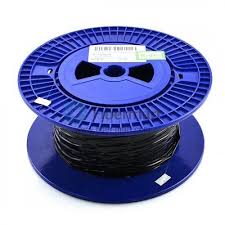
Corning SMF-LS Bare Optical Fiber
SMF-LS is a dispersion-shifted fiber with low dispersion slope, sharing the design approach of MetroCor. It exists in installed plant and in test-spool applications where its specific dispersion profile is required.
- ITU-T standard
- G.655
- Fiber type
- Dispersion-shifted, low slope
- Attenuation @ 1550 nm
- ≤ 0.22 dB/km
SMF-LS (low slope) was designed to flatten the dispersion curve across the EDFA C-band, reducing the wavelength-to-wavelength dispersion variation across a DWDM channel plan. This is useful in systems that cannot use individual channel dispersion compensation but need the residual dispersion to be equal across all channels.
As with MetroCor, SMF-LS is legacy fiber. It is not a choice for new builds. We supply it for mid-span splicing into installed SMF-LS plant and for test spools. Confirm the required standard, length, and connector preferences and we will quote availability.
Specifications
| ITU-T standard | G.655 |
|---|---|
| Fiber type | Dispersion-shifted, low slope |
| Attenuation @ 1550 nm | ≤ 0.22 dB/km |
Typical Applications
- Legacy matching for SMF-LS installed plant
- Test spools with low-slope dispersion characteristics
Why Order Corning Fiber from Aumictech?
We source directly from the Corning authorized channel. Every spool ships with documentation, including reel ID and fiber code.
0.5 km to 1,000 km on a single order. Mix lengths across spools. Choose FC, SC, or LC connectors per spool end, or leave ends bare.
Certificate of compliance and OTDR test data available on request. Required for carrier acceptance testing and network documentation.
Continental US next-day and two-day air available. International shipping on request. Most orders confirmed within one business day.
Frequently Asked Questions
What does low dispersion slope mean?
Dispersion slope describes how dispersion changes with wavelength, expressed in ps/nm²/km. A flat dispersion curve means the dispersion at 1530 nm is close to the dispersion at 1565 nm. In a DWDM system, flatter dispersion means less variation in pulse spreading across channels, which allows a single dispersion compensation module to work reasonably well for all channels rather than requiring per-channel tuning.