
HP 81600B vs Santec TSL-510
Side-by-side comparison · Aumictech Labs
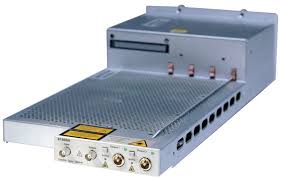
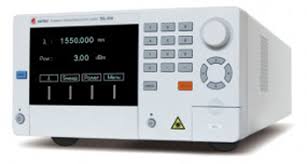
At a glance
AI-generated analysis
Technical differences
The HP 81600B with option 071/132 covers 1260-1375 nm with stated relative wavelength accuracy of ±3.6 pm and exceptional power stability at ±0.03 dB over 24 hours. This instrument features a built-in 60 dB optical attenuator, enabling precise power control across its operating range. The 81600B is designed as a modular platform where this particular configuration represents one wavelength band option within a family that extends to 1640 nm with no gaps when different modules are installed.
The Santec TSL-510 operates across multiple discrete bands including 1260-1360 nm, 1340-1440 nm, 1420-1520 nm, 1500-1630 nm, and 1560-1680 nm, providing broader overall wavelength coverage. However, the transition between bands creates operational gaps rather than continuous tuning. Power output varies significantly by band and mode, ranging from as low as -4 dBm to +13 dBm depending on wavelength region and model variant. The TSL-510 does not specify wavelength accuracy or long-term power stability in the same manner as the HP unit, though it includes NIST calibration.
Choose the HP 81600B if:
- You require continuous tuning within the O-band (1260-1375 nm) without wavelength gaps between operating ranges
- Long-term measurement stability and repeatability are critical, particularly the ±0.03 dB power stability specification over extended periods
- You need sub-5 pm wavelength accuracy for precision optical component testing or telecommunications standards verification
- You plan to perform high-accuracy power measurements and require an integrated attenuator for dynamic range control
Choose the Santec TSL-510 if:
- You need wavelength coverage spanning multiple bands from O through C to L-band and can work within discrete tuning ranges
- Your budget is a primary constraint, with the $14,000 price difference justifying potential workflow adjustments
- Applications tolerate broader wavelength accuracy specifications and moderate power stability requirements
- You require flexibility to test components across a wider spectral window even with gaps between tuning bands
Our take
For most buyers, the HP 81600B represents better value despite the higher price. The ±3.6 pm wavelength accuracy and ±0.03 dB power stability are measurable advantages for any serious optical testing application, while the integrated attenuator eliminates the need for external hardware. The Santec TSL-510 makes sense primarily as a cost-conscious choice when you operate within defined wavelength bands and can tolerate less stringent stability requirements. If your work involves O-band testing or telecommunications component characterization, the HP's specifications justify the investment. If you need multi-band coverage and budget is restrictive, accept the TSL-510's limitations.
Analysis generated by Claude AI. Verify specs with manufacturer datasheets before purchasing.
Full specification comparison
| Specification | HP 81600B | Santec TSL-510 |
|---|---|---|
| Wavelength range | 1260 nm to 1640 nm across the family, no gaps | N/A |
| Relative wavelength accuracy | typ. ±3.6 pm | N/A |
| Optical power stability | typ. ±0.03 dB over 24 hours | N/A |
| Built-in optical attenuator | 60 dB range on equipped modules | N/A |
| Power Range (dBm)O | N/A | ≥+13 dBm (Type A/C), ≥+2 dBm (1260–1360 nm Type D peak), ≥+8 dBm (1560–1680 nm Type A/C), ≥−2 dBm (1260–1360 nm Type D full-range), ≥−4 dBm (1560–1680 nm Type B/D) | Wavelength Range: 1260–1360 nm, 1340–1440 nm, 1420–1520 nm, 1500–1630 nm, 1560–1680 nm |
| Band | N/A | O -Band |
Interested in the HP 81600B?
View HP 81600BInterested in the Santec TSL-510?
View Santec TSL-510Compare other instruments using the Compare button on any product page.