
Yokogawa AQ1215F vs Exfo FTB-7534B
Side-by-side comparison · Aumictech Labs
At a glance
AI-generated analysis
Technical differences
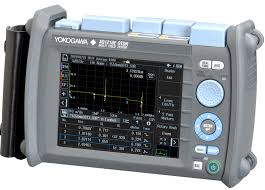
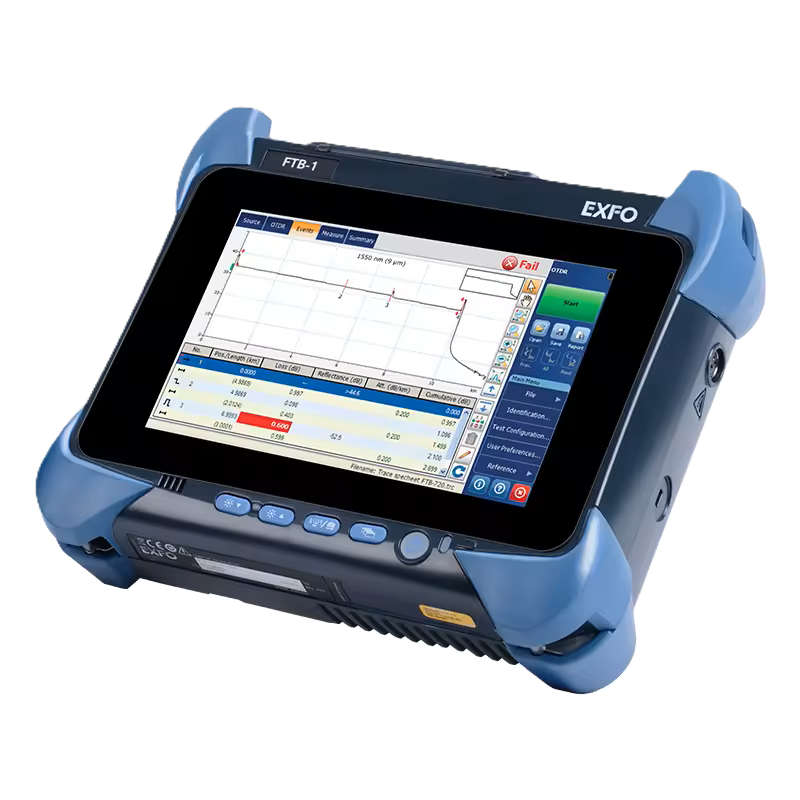
The Yokogawa AQ1215F offers significantly broader wavelength coverage with three operating bands: 1310 nm, 1550 nm, and 1650 nm. This multi-wavelength capability makes it suitable for testing diverse fiber types and network configurations. The 1310 nm band is essential for standard single-mode fiber testing, while the 1550 nm and 1650 nm bands address long-haul and specialized applications. The Exfo FTB-7534B operates only at 1550 nm and 1625 nm, limiting its versatility to longer-wavelength testing scenarios. The wavelength tolerances are comparable, with the Yokogawa maintaining ±25 nm accuracy at 1310 and 1550 nm, and tighter ±5 nm tolerance at 1650 nm.
Input power handling differs substantially between these instruments. The Yokogawa accommodates higher maximum input levels, particularly the +27 dBm rating at 1550 nm in high-power mode, compared to the Exfo's standard specifications. This matters when testing systems with high-power optical signals or when measuring reflected signals from connectors and splitters. However, the OTDR port on the Yokogawa is limited to -5 dBm maximum input, which is a typical protective constraint. Neither instrument includes NIST calibration, meaning users should factor calibration costs into their total investment if traceability is required.
Choose the Yokogawa AQ1215F if:
- You need to test across multiple wavelengths, especially 1310 nm networks or 1650 nm long-haul systems
- Your work involves varied fiber types and network architectures requiring wavelength flexibility
- You anticipate testing high-power optical systems where the extended input range is advantageous
Choose the Exfo FTB-7534B if:
- Your testing is limited to 1550 nm and 1625 nm bands only
- You prioritize lower acquisition cost and have constrained budget
- You work in a specialized environment where only long-wavelength OTDR testing is needed
Our take
The Yokogawa AQ1215F represents better value for most buyers despite the $2,100 price premium. The three-wavelength capability addresses a broader range of field scenarios and provides future flexibility as network requirements evolve. For field technicians and service providers supporting multiple customer bases, single-wavelength limitation becomes operationally restrictive. The Exfo FTB-7534B makes sense only if your testing scope is definitively constrained to 1550/1625 nm bands. Even then, the cost savings are modest relative to the capability loss, making the Exfo viable primarily for budget-limited operations with narrowly defined testing requirements.
Analysis generated by Claude AI. Verify specs with manufacturer datasheets before purchasing.
Full specification comparison
| Specification | Yokogawa AQ1215F | Exfo FTB-7534B |
|---|---|---|
| Power Range (dBm) | OTDR port: −5 dBm maximum input | N/A |
| OPM/PON-OPM port | +10 dBm (1310/1490 nm) or +27 dBm (1550 nm high-power mode) maximum input | Wavelength Range: 1310 nm ±25 nm, 1550 nm ±25 nm, 1650 nm ±5 nm | N/A |
| Wavelength Range | N/A | 1550 nm ± 20 nm and 1625 nm ± 10 nm |
Interested in the Yokogawa AQ1215F?
View Yokogawa AQ1215FInterested in the Exfo FTB-7534B?
View Exfo FTB-7534BCompare other instruments using the Compare button on any product page.