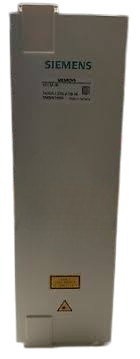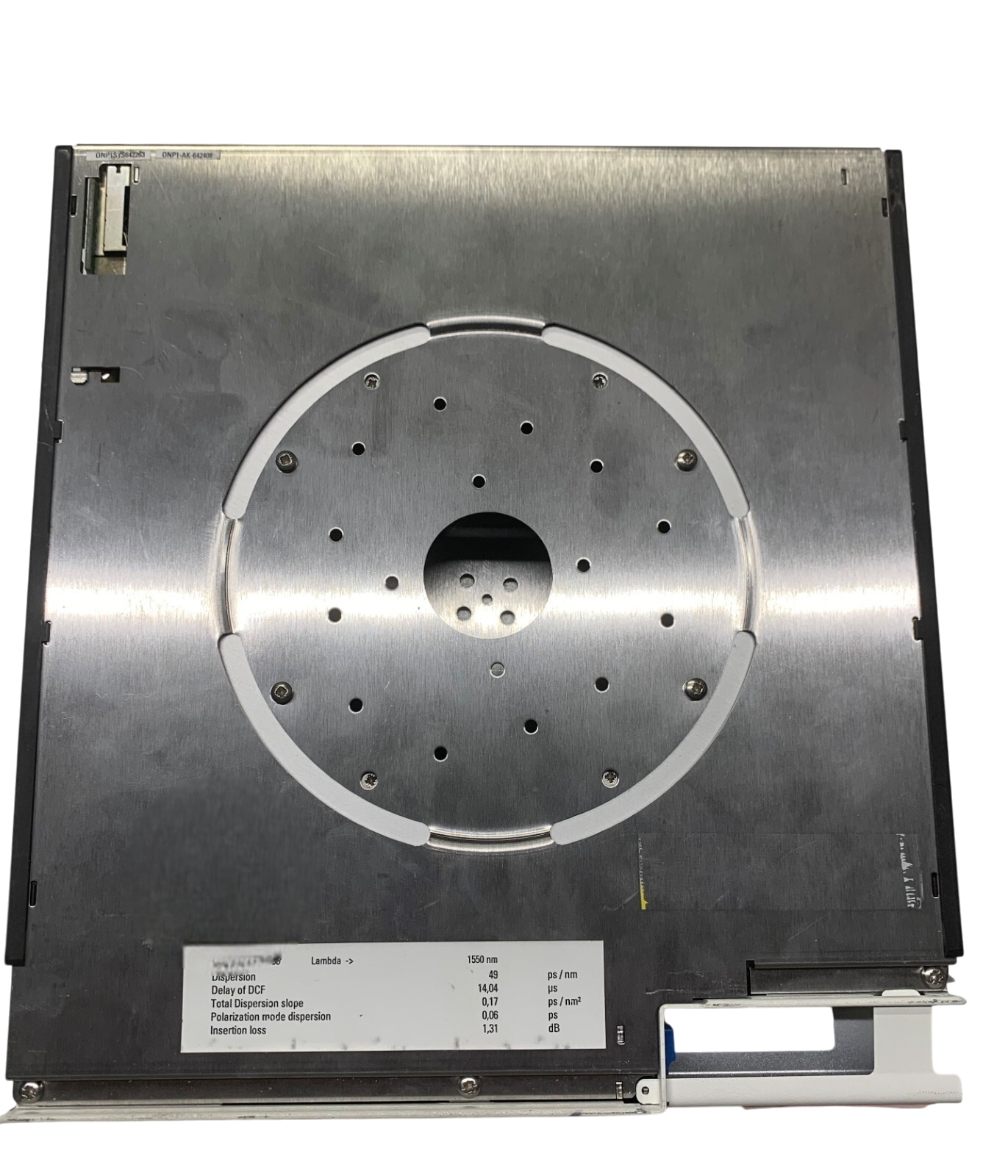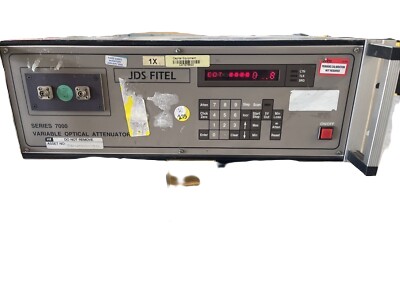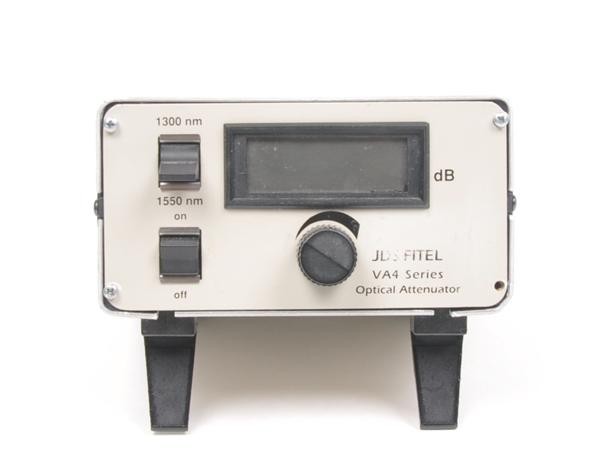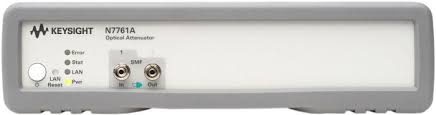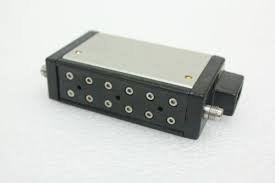
JDS Uniphase MTA300-Z028
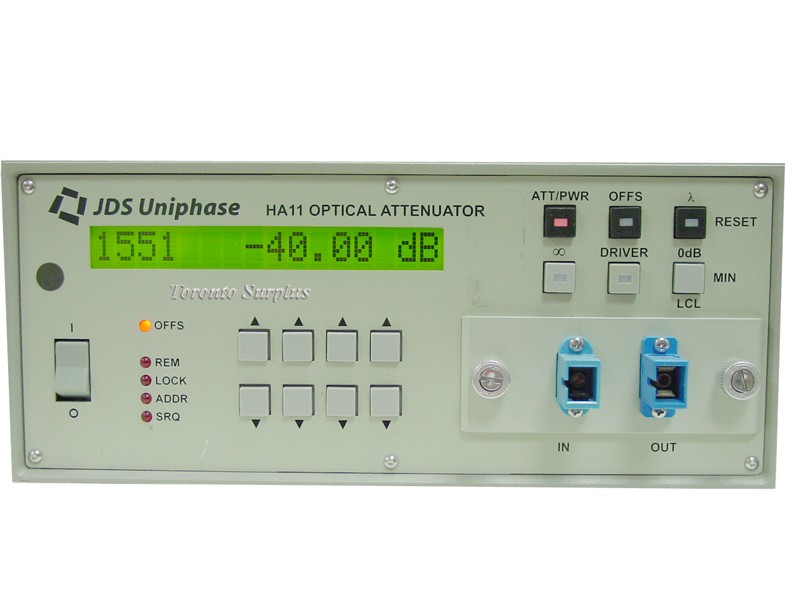
JDS Uniphase Optical Attenuators. Resolution: ** 0.05 dB nominal, Accuracy: ** Better than ±0.1 dB.
- Model
- JDS Uniphase MTA300-Z028
- Calibration
- Available on request
- Price · starting from
- $3,400
- Status
- In stock
- RFQ ref
- MTA300-Z028
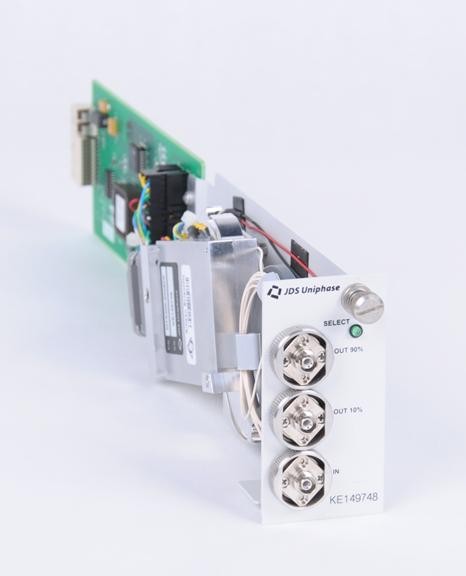
This unit
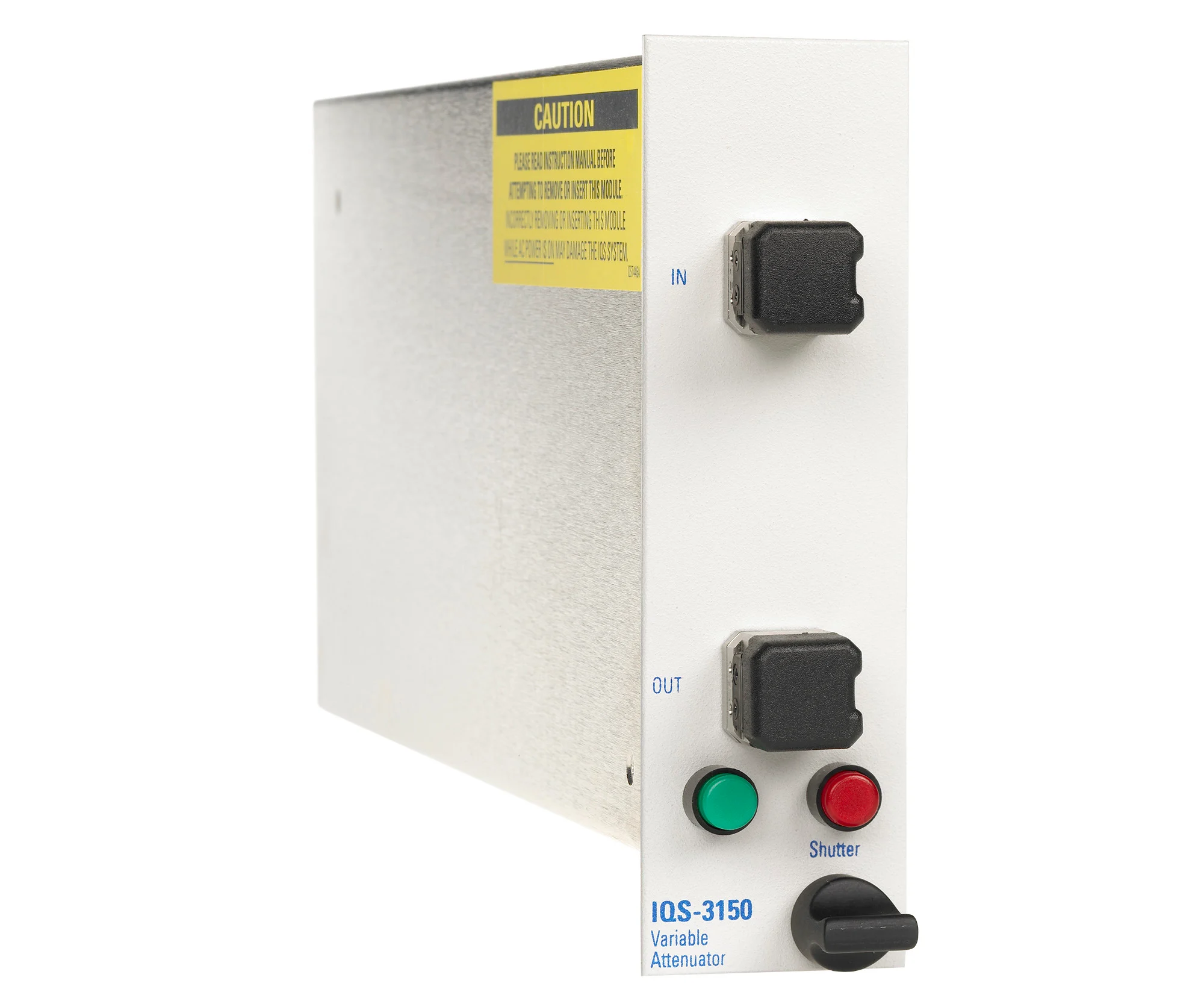
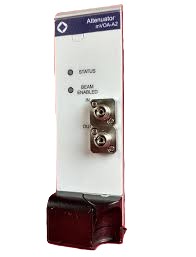
The JDS Uniphase MTA300-Z028 is an optical attenuator cassette for the MTA 300 series modular platform. It has programmable attenuation exceeding 60 dB with 0.05 dB resolution and ±0.1 dB accuracy, enabling precise optical power control in telecommunications and data center environments. The cassette integrates into the MTA shelf - a 19-inch rack-mounted chassis that accommodates up to eight attenuator cassettes plus one controller unit.
Technical Specifications
Attenuation Range: Programmable, exceeding 60 dB
Resolution: 0.05 dB nominal
Accuracy: Better than ±0.1 dB
Wavelength Range: Optimized for 1550 nm; usable over 1200–1700 nm
Fiber Type: Singlemode
Optical Interface: SC/APC
Polarization Dependent Loss (PDL): Low
Return Loss: Low
Design: Etalon-free for minimal distortion
Power Input (Shelf): 100–240 V AC, 50–60 Hz
Maximum Power Consumption (Shelf): 80 VA
Fuse: (5×20) mm, T1A/250 V (slow-blow)
Key Features
Etalon-free design ensures low optical distortion
Low PDL and return loss characteristics
SCPI-compatible command set for remote operation
Dual control interface: front panel keypad and GPIB remote
LabVIEW driver support for automated test sequences
Modular cassette architecture for flexible multi-channel configurations
Typical Applications
DWDM system test beds
Data center optical networks
Enterprise network validation
Telecommunications infrastructure deployment
Per-channel power equalization
Optical signal stabilization and level adjustment
Compatibility & Integration The MTA300-Z028 operates within the MTA 300 series shelf, a 19-inch rack-mountable enclosure. The platform supports GPIB remote interface and SCPI commands, enabling integration with existing test automation frameworks. LabVIEW drivers streamline development of custom measurement routines.
Specifications
| Parameter | Value |
|---|---|
| Voltage / Current Range | 100–240 V AC, 50–60 Hz |
| max 80 VA | Wavelength Range | 1200–1700 nm (optimized for 1550 nm) |
JDS Uniphase MTA300-Z028 — Repair & Calibration Service
Aumictech offers NIST-traceable calibration and repair for the JDS Uniphase MTA300-Z028. Calibration covers attenuation accuracy at 5 or more set values across the full range (0 to rated maximum dB), attenuation linearity, wavelength-dependent attenuation at 1310 nm, 1490 nm, and 1550 nm, insertion loss at minimum attenuation (0 dB position), and polarization-dependent loss (PDL) where applicable. All calibrations ship with a NIST-traceable certificate. Turnaround is typically 1–3 business days after receipt.
Common JDS Uniphase MTA300-Z028 faults: motor and gear mechanism wear (attenuation steps or loss of smooth control), optical port contamination, EEPROM calibration data corruption. Most common faults are motor or gear mechanism wear on variable attenuators causing attenuation steps or loss of smooth control, optical port contamination reducing dynamic range, and EEPROM calibration data corruption on digitally controlled models.
JDS Uniphase MTA300-Z028 price
This JDS Uniphase MTA300-Z028 is listed at $3,400. Calibration is available separately from $450. Contact us for volume pricing or if you need multiple units.
JDS Uniphase MTA300-Z028 calibration cost
NIST-traceable calibration for the JDS Uniphase MTA300-Z028 is $450 (standard — pass/fail certificate and calibration sticker) or $650 (full measured data at every test point, reference standards documented, traceability chain included). Calibration for this instrument covers attenuation accuracy at 5 or more set values across the full range (0 to rated maximum dB), attenuation linearity, wavelength-dependent attenuation at 1310 nm, 1490 nm, and 1550 nm, insertion loss at minimum attenuation (0 dB position), and polarization-dependent loss (PDL) where applicable. Turnaround is 1 to 3 business days after receipt. See full calibration details →