JDS Uniphase TB9 JDSU TB9226-Z-FP Tunable Grating Filter 1460-1570nm
JDS Uniphase/JDSU Optical Attenuators. Bandwidth: 0.22 nm, Bandwidth: 0.6 nm, Resolution: 0.01 nm.
- Model
- JDS Uniphase/JDSU TB9226-Z-FP
- Calibration
- Available on request
- Price · starting from
- $4,830
- Status
- In stock
- RFQ ref
- TB9226-Z-FP
This unit
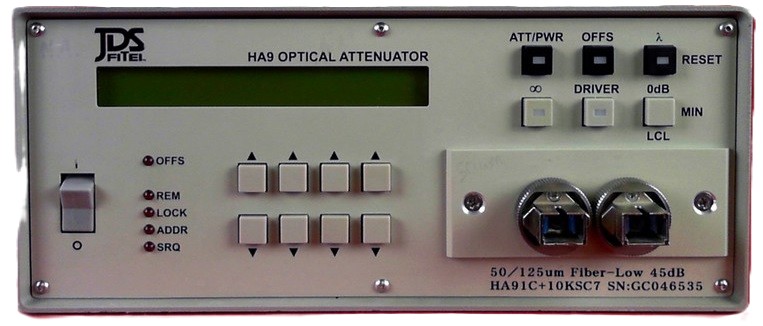
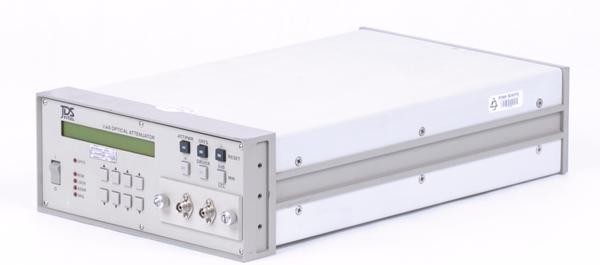
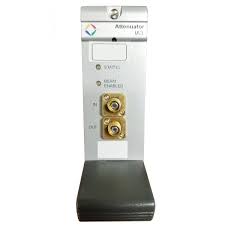
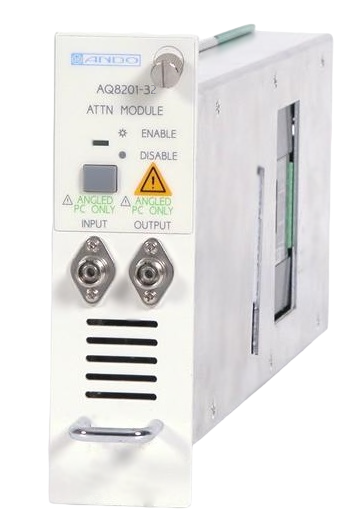
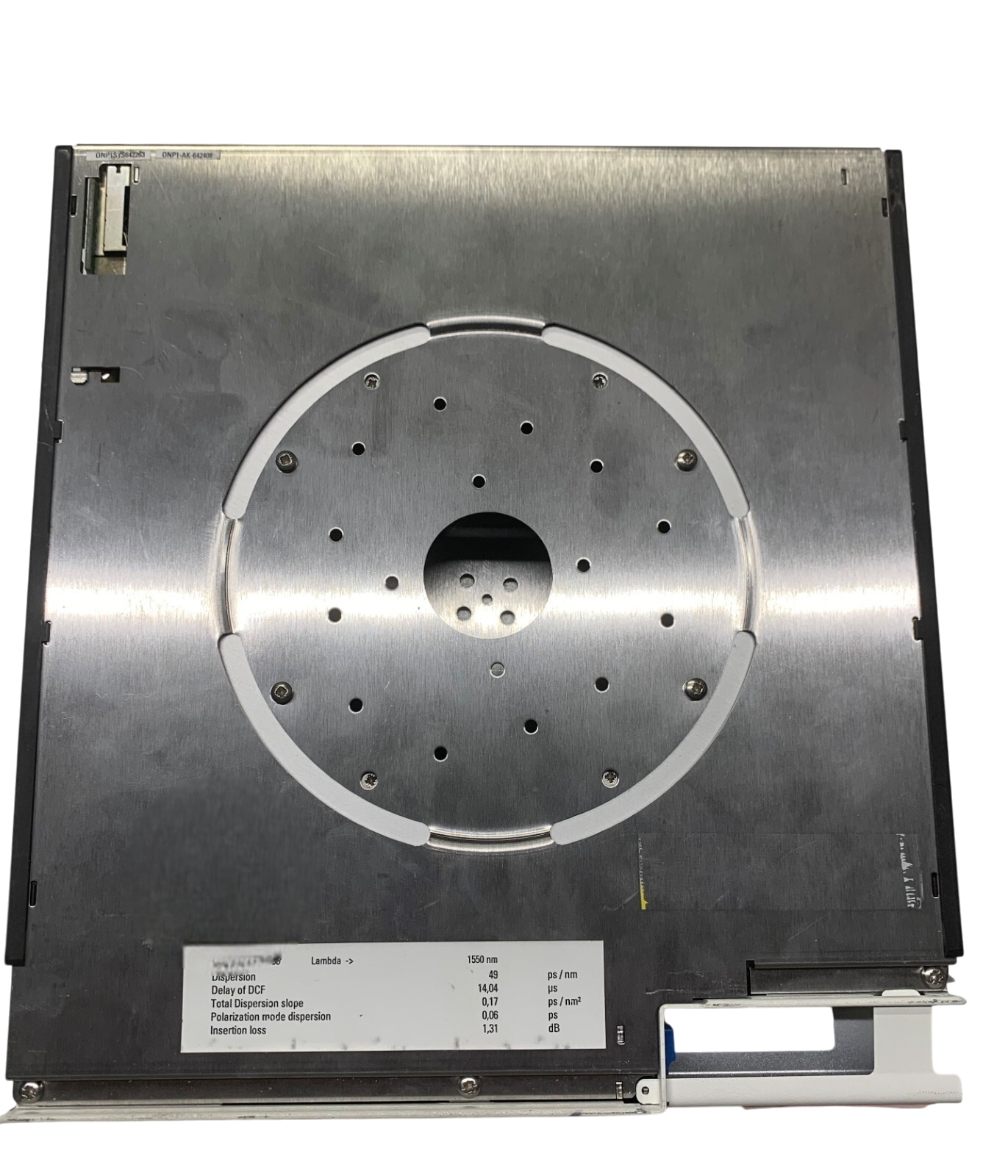
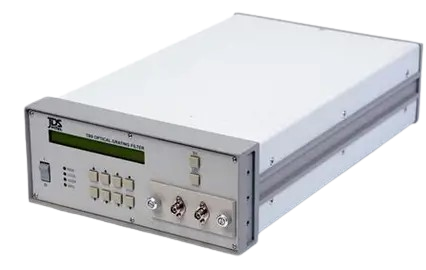
The JDS Uniphase TB9226-Z-FP is a tunable grating filter engineered for precise wavelength selection across the C and L optical bands. Operating from 1460–1575 nm with optimized performance in the 1530–1570 nm window, it delivers the narrow linewidth and high spectral rejection required for demanding laboratory and production test environments. This instrument excels at ASE filtering in erbium-doped fiber amplifiers and suppression of spontaneous emission from DFB and tunable laser sources during component characterization.
Technical Specifications
- Wavelength Range: 1460–1575 nm tuning; 1530–1570 nm optimized operation; 1525–1625 nm C+L-band coverage
- -3 dB Bandwidth: 0.22 nm
- -20 dB Bandwidth: 0.6 nm
- Insertion Loss: <7.0 dB
- Polarization Dependent Loss (PDL): 45 dB
- Wavelength Resolution: 0.01 nm
- Repeatability: 0.05 nm
- Optical Connectors: FC/PC bulkhead (front panel)
- Warm-up Time: 1 hour
Key Features
- Tunable grating architecture with single and double-pass grating configurations for high spectral rejection
- Three independent control paths: front-panel keypad, GPIB (IEEE 488), and RS232
- <0.05 nm wavelength repeatability ensures stable, reproducible measurements
- Low PDL (45 dB) minimizes reflection artifacts
Typical Applications
- Amplified spontaneous emission (ASE) filtering in EDFA chains
- Spontaneous emission rejection from DFB and tunable laser sources
- Wavelength-selective component measurements in single-mode fiber systems
- WDM and DWDM component validation
- production test of fiber-optic subsystems
Compatibility & Integration FC/PC optical connectors on the front panel accept standard single-mode fiber patch cords. Remote control via GPIB or RS232 enables integration into automated test racks and production environments.
Specifications
| Parameter | Value |
|---|---|
| Wavelength Range | 1460–1575 nm tuning |
JDS Uniphase/JDSU TB9226-Z-FP — Repair & Calibration Service
Aumictech offers NIST-traceable calibration and repair for the JDS Uniphase/JDSU TB9226-Z-FP. Calibration covers attenuation accuracy at 5 or more set values across the full range (0 to rated maximum dB), attenuation linearity, wavelength-dependent attenuation at 1310 nm, 1490 nm, and 1550 nm, insertion loss at minimum attenuation (0 dB position), and polarization-dependent loss (PDL) where applicable. All calibrations ship with a NIST-traceable certificate. Turnaround is typically 1–3 business days after receipt.
Common JDS Uniphase/JDSU TB9226-Z-FP faults: motor and gear mechanism wear (attenuation steps or loss of smooth control), optical port contamination, EEPROM calibration data corruption. Most common faults are motor or gear mechanism wear on variable attenuators causing attenuation steps or loss of smooth control, optical port contamination reducing dynamic range, and EEPROM calibration data corruption on digitally controlled models.
JDS Uniphase/JDSU TB9226-Z-FP price
This JDS Uniphase/JDSU TB9226-Z-FP is listed at $4,830. Calibration is available separately from $450. Contact us for volume pricing or if you need multiple units.
JDS Uniphase/JDSU TB9226-Z-FP calibration cost
NIST-traceable calibration for the JDS Uniphase/JDSU TB9226-Z-FP is $450 (standard — pass/fail certificate and calibration sticker) or $650 (full measured data at every test point, reference standards documented, traceability chain included). Calibration for this instrument covers attenuation accuracy at 5 or more set values across the full range (0 to rated maximum dB), attenuation linearity, wavelength-dependent attenuation at 1310 nm, 1490 nm, and 1550 nm, insertion loss at minimum attenuation (0 dB position), and polarization-dependent loss (PDL) where applicable. Turnaround is 1 to 3 business days after receipt. See full calibration details →