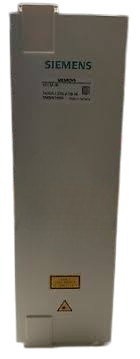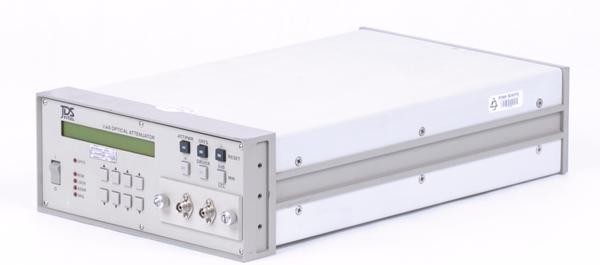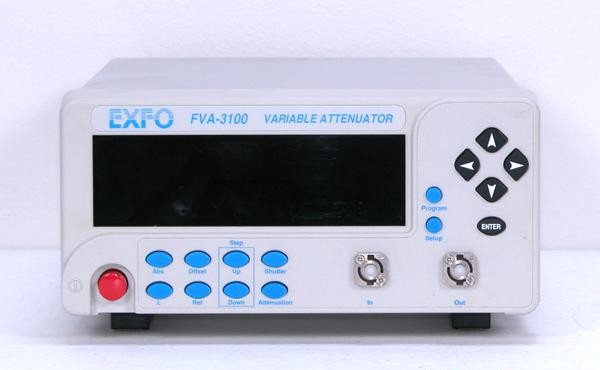
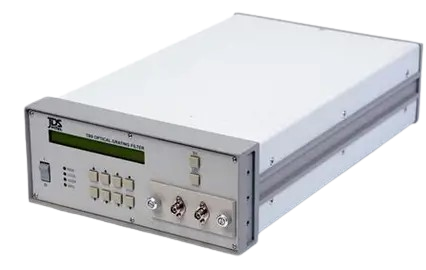
JDS Uniphase TB9 JDSU TB9166-1FA1 Tunable Grating Filter
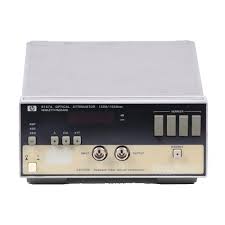
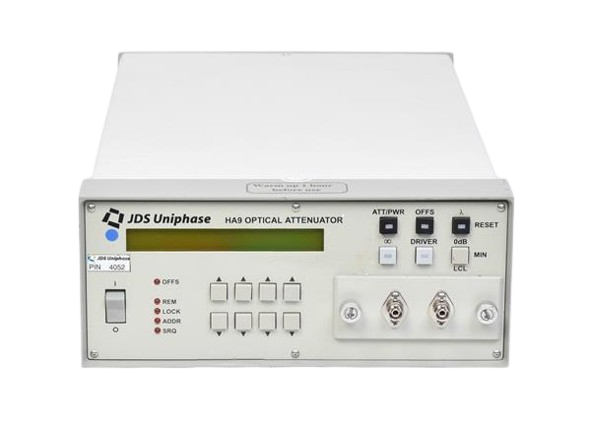
The JDS Uniphase TB9 JDSU TB9166-1FA1 is a tunable grating filter designed for optical communication systems. It allows for precise wavelength selection and filtering. This filter is ideal for applications requiring dynamic wavelength management and signal conditioning.
- Model
- JDS Uniphase/JDSU TB9166-1FA1
- Calibration
- Available on request
- Price · starting from
- $4,830
- Status
- In stock
- RFQ ref
- TB9166-1FA1
This unit
The JDS Uniphase TB9 JDSU TB9166-1FA1 is a tunable grating filter engineered for precision wavelength selection in single-mode fiber-based component and subsystem testing. Grating-based optical filtering delivers superior wavelength isolation compared to Fabry-Perot etalons or interference filters, with bandwidth as narrow as 0.25 nm @ -3 dB and high spectral rejection. The instrument excels at ASE filtering in EDFA applications and removal of spontaneous emission from DFB and tunable lasers during characterization of wavelength-selective components.
Technical Specifications
- Wavelength Range: 1525–1625 nm, 1530–1570 nm
- Bandwidth (FWHM): 0.25 nm @ -3 dB
- Wavelength Adjustment Resolution: 0.01 nm
- Repeatability: 0.05 nm
- Insertion Loss: 45 dB
- Polarization Dependent Loss: < 0.6 dB
- Warm-up Time: 1 hour to specification
- Optical Connectors: FC/APC bulkhead (single-mode fiber input/output)
- Configurations: Single and double pass grating available
Key Features
- Tunable grating architecture with high rejection and narrow bandwidth options
- Wavelength tuning with 0.01 nm resolution and 0.05 nm repeatability
- Low insertion loss and PDL for minimal signal degradation
- Dual control interfaces: front panel keypad, GPIB, and RS232 serial
- Low power consumption: 80 VA maximum
Typical Applications
- Laboratory and production testing of single-mode fiber components and subsystems
- EDFA amplified spontaneous emission (ASE) filtering
- Spontaneous emission suppression in DFB and tunable laser measurements
- WDM and DWDM component characterization
Compatibility & Integration Operates from single-phase AC sources (100–240 V, 50–60 Hz). Complies with CE marking, UL3101-1, CAN/CSA-C22.2 No. 1010.1, and UL 1950 safety standards.
Specifications
| Parameter | Value |
|---|---|
| Voltage / Current Range | 100–240 VAC, 50–60 Hz, 80 VA max | Wavelength Range: 1525–1625 nm, 1530–1570 nm |
JDS Uniphase/JDSU TB9166-1FA1 — Repair & Calibration Service
Aumictech offers NIST-traceable calibration and repair for the JDS Uniphase/JDSU TB9166-1FA1. Calibration covers attenuation accuracy at 5 or more set values across the full range (0 to rated maximum dB), attenuation linearity, wavelength-dependent attenuation at 1310 nm, 1490 nm, and 1550 nm, insertion loss at minimum attenuation (0 dB position), and polarization-dependent loss (PDL) where applicable. All calibrations ship with a NIST-traceable certificate. Turnaround is typically 1–3 business days after receipt.
Common JDS Uniphase/JDSU TB9166-1FA1 faults: motor and gear mechanism wear (attenuation steps or loss of smooth control), optical port contamination, EEPROM calibration data corruption. Most common faults are motor or gear mechanism wear on variable attenuators causing attenuation steps or loss of smooth control, optical port contamination reducing dynamic range, and EEPROM calibration data corruption on digitally controlled models.
JDS Uniphase/JDSU TB9166-1FA1 price
This JDS Uniphase/JDSU TB9166-1FA1 is listed at $4,830. Calibration is available separately from $450. Contact us for volume pricing or if you need multiple units.
JDS Uniphase/JDSU TB9166-1FA1 calibration cost
NIST-traceable calibration for the JDS Uniphase/JDSU TB9166-1FA1 is $450 (standard — pass/fail certificate and calibration sticker) or $650 (full measured data at every test point, reference standards documented, traceability chain included). Calibration for this instrument covers attenuation accuracy at 5 or more set values across the full range (0 to rated maximum dB), attenuation linearity, wavelength-dependent attenuation at 1310 nm, 1490 nm, and 1550 nm, insertion loss at minimum attenuation (0 dB position), and polarization-dependent loss (PDL) where applicable. Turnaround is 1 to 3 business days after receipt. See full calibration details →