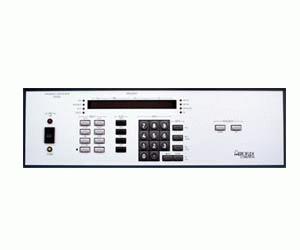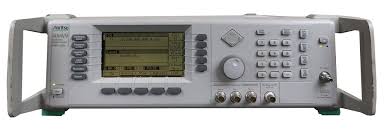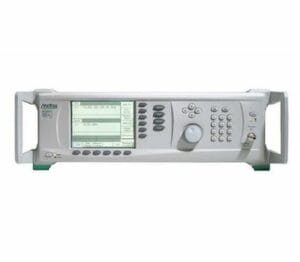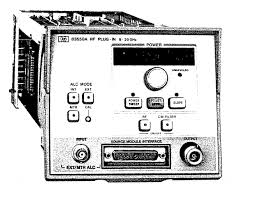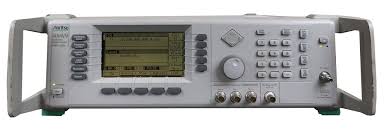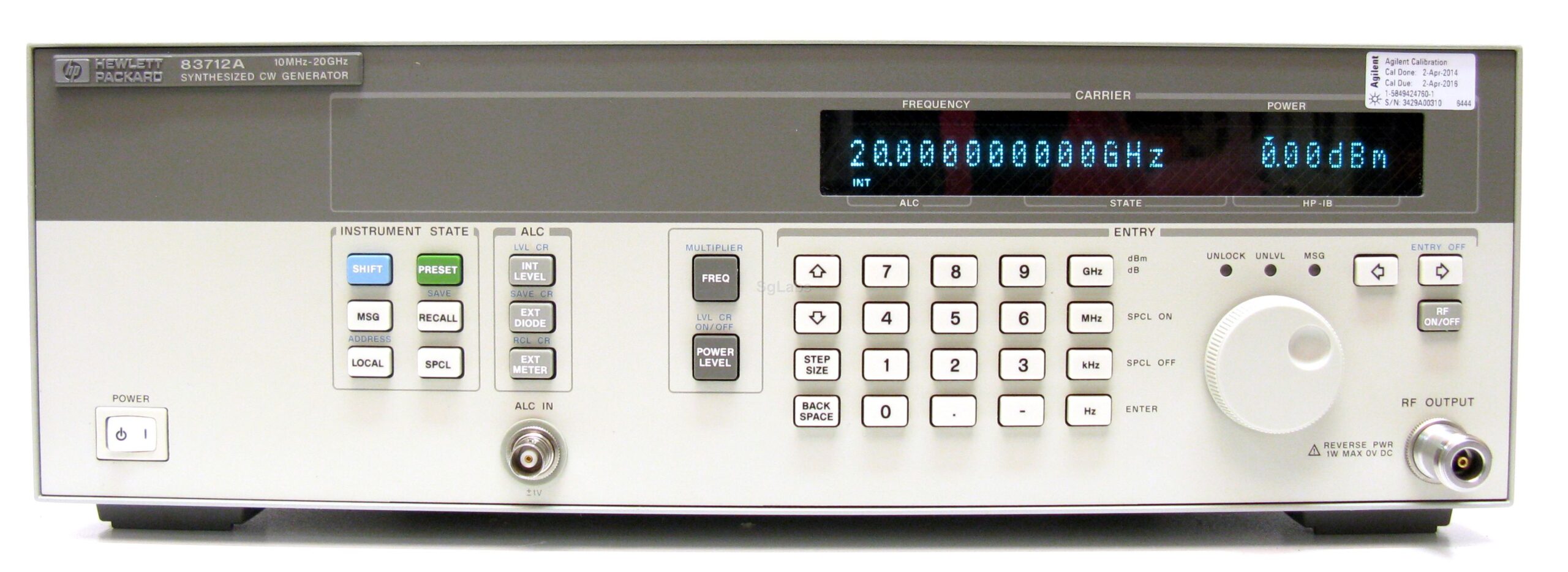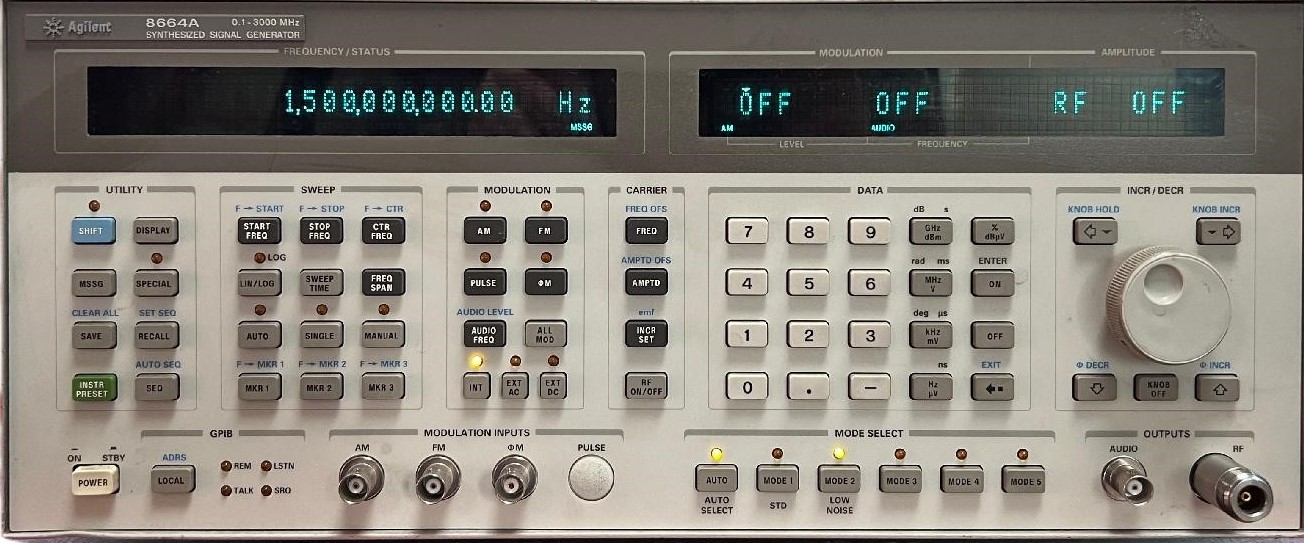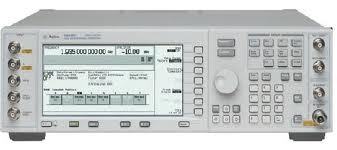
Anritsu 69397A Synthesized Sweep/Signal Generator, 0.01 – 65 GHz
Anritsu 69397A Synthesized Sweep/Signal Generator, 0.01 – 65 GHz, provides precise and stable signal generation across an ultra-wide frequency range. It supports advanced modulation formats for testing modern communication systems.
- Model
- Anritsu 69397A
- Calibration
- Available on request
- Price · starting from
- $36,830
- Status
- In stock
- RFQ ref
- 69397A
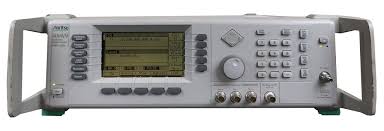
This unit
The Anritsu 69397A is a synthesized sweep/signal generator delivering precise, stable RF signal generation across 0.01 to 65 GHz. Purpose-built for local oscillator replacement and demanding CW applications, this instrument combines ultra-low SSB phase noise at -107 dBc/Hz (10 kHz offset from 10 GHz) with flexible sweep architectures and comprehensive modulation capability. Output spans -125 dBm to +17 dBm with optional 0.1 Hz frequency resolution.
Technical Specifications
Frequency Range: 0.01–65 GHz Output Power: -125 dBm to +17 dBm Phase Noise: -107 dBc/Hz (10 kHz offset from 10 GHz, SSB) Switching Time: Typically <15 ms + 1 ms/GHz step size, or <40 ms maximum Time Base Stability:- Accuracy: Matches internal or external 10 MHz reference
- Aging: <2 × 10⁻⁸/day (standard); <5 × 10⁻¹⁰/day with Option 16
- Temperature Stability: <2 × 10⁻⁸/°C over 0–55 °C (standard); <2 × 10⁻¹⁰/°C with Option 16 Memory Storage:
- Volatile: Four tables, 2000 frequency/power sets each (List Sweep)
- Non-volatile: One table, 2000 points
Key Features Sweep Modes: Analog, step, manual, and CW sweep with user-selectable step counts or sizes. Dwell time per step ranges from 1 ms to 99 seconds. Modulation: AM, FM, phase, and pulse modulation via external or internal sources. Internal modulation offers seven waveforms including Gaussian noise and arbitrary user-defined patterns. Reference I/O: Accepts external 10 MHz reference input; provides 0.5 V p-p 10 MHz reference output (50 Ω, AC coupled) from rear panel BNC connector.
Interfaces & Integration GPIB (IEEE 488.2), Ethernet (10BASE-T), USB, and AUX I/O connector with TTL triggering support enable both bench and automated system control.
Form Factor Rackmount configuration.
Specifications
| Parameter | Value |
|---|---|
| Frequency Range | 0.01–65 GHz | Power Range (dBm): '-125 dBm to +17 dBm | Voltage / Current Range: 0.5 V p-p (10 MHz reference output into 50 Ω) |
Anritsu 69397A — Repair & Calibration Service
Aumictech offers NIST-traceable calibration and repair for the Anritsu 69397A. Calibration covers output frequency accuracy, output power level accuracy across the full frequency range, AM/FM/PM/pulse modulation accuracy, harmonic and spurious output levels, and phase noise floor verification. All calibrations ship with a NIST-traceable certificate. Turnaround is typically 1–3 business days after receipt.
Common Anritsu 69397A faults: YIG oscillator failure (no output or loss of lock), step attenuator wear (output drops or steps at set attenuation), ALC loop failure (uncontrolled output power), I/Q modulator assembly failure. HP/Agilent 836xx series most common faults are YIG oscillator failure and step attenuator contact wear causing output steps or drops at specific attenuation settings. Keysight E4428C/E4438C units most commonly develop ALC loop failure and I/Q modulator assembly faults. YIG oscillator replacement and attenuator service are stocked repairs.
Anritsu 69397A price
This Anritsu 69397A is listed at $36,830. Calibration is available separately from $450. Contact us for volume pricing or if you need multiple units.
Anritsu 69397A calibration cost
NIST-traceable calibration for the Anritsu 69397A is $450 (standard — pass/fail certificate and calibration sticker) or $650 (full measured data at every test point, reference standards documented, traceability chain included). Calibration for this instrument covers output frequency accuracy, output power level accuracy across the full frequency range, AM/FM/PM/pulse modulation accuracy, harmonic and spurious output levels, and phase noise floor verification. Turnaround is 1 to 3 business days after receipt. See full calibration details →