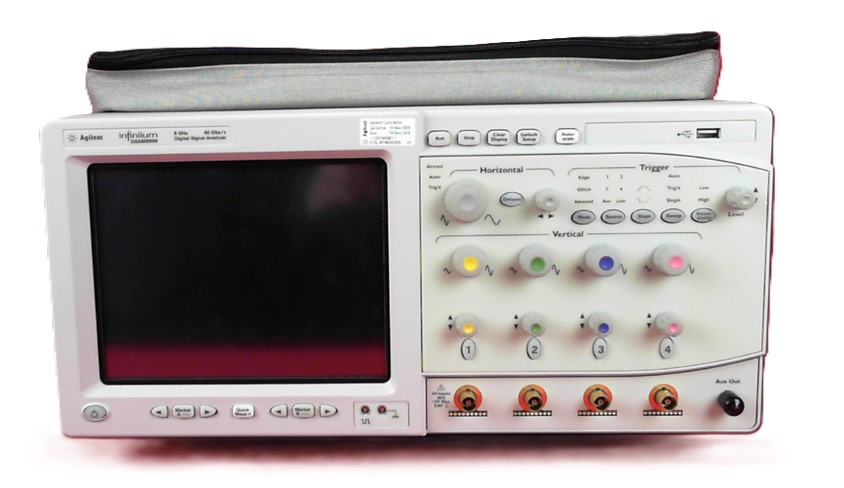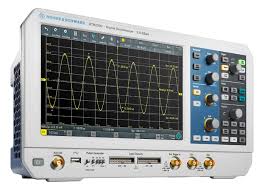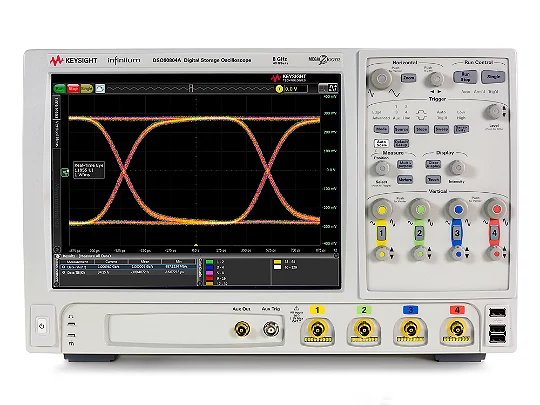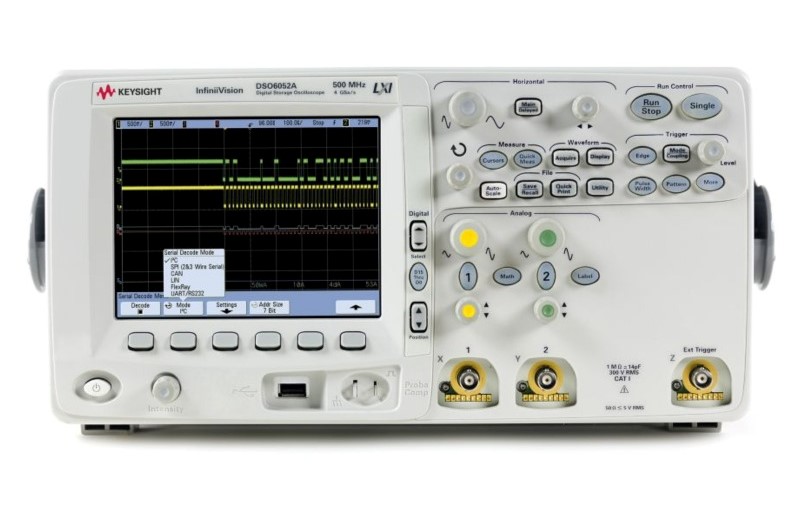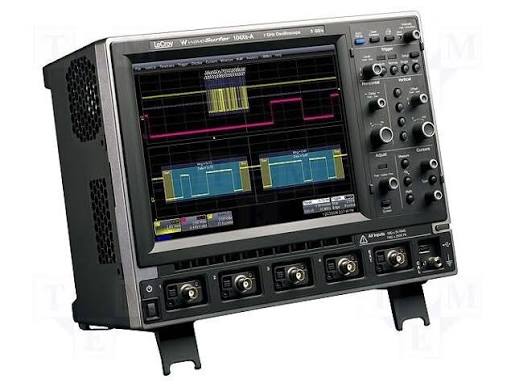
Teledyne LeCroy WaveSurfer 3054Z 500MHz Oscilloscope
The Teledyne LeCroy WaveSurfer 3054Z is a 500 MHz oscilloscope, known for its advanced signal integrity and analysis capabilities. It features a large display, intuitive user interface, and a suite of debugging tools. Ideal for engineers and technicians working on complex electronic designs.
- Model
- Teledyne LeCroy WaveSurfer 3054Z
- Calibration
- Available on request
- Price
- $12,479
- RFQ ref
- WaveSurfer 3054Z
This unit
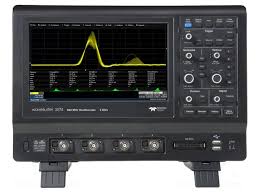
The Teledyne LeCroy WaveSurfer 3054Z is a 500 MHz, 4-channel digital storage oscilloscope engineered for signal integrity analysis and advanced debugging. Its 10.1-inch capacitive touch screen and MAUI interface enable rapid problem isolation through anomaly detection, WaveScan search functionality, and mask testing. The instrument delivers deep memory, fast waveform capture rates exceeding 130,000 waveforms/sec, and optional 16-channel mixed-signal capability for complex digital validation.
Technical Specifications
Acquisition & Sampling- Analog bandwidth: 500 MHz @ 50 Ω (-3 dB)
- Sample rate: 2 GS/s (single-shot), 4 GS/s (interleaved), up to 50 GS/s (repetitive)
- Rise time: 800 ps typical
- Memory: 10 Mpts standard (4 channels), 20 Mpts (2 channels), up to 20 Mpts long memory
- Vertical resolution: 8-bit, upgradeable to 11-bit with Enhanced Resolution (ERES) Input Characteristics
- Impedance: 1 MΩ ± 2.0% || 16 pF or 50 Ω ± 2.0%
- Maximum input voltage: 400 V (1 MΩ path, DC + Peak AC ≤10 kHz); 5 VRMS (50 Ω)
- Sensitivity: 1 mV/div to 10 V/div; ±1.5% accuracy (≥5 mV/div offset at 0 V); ±2.5% (<5 mV/div)
- Bandwidth limiting: 20 MHz, 200 MHz options
- Coupling: AC, DC, GND Timebase & Acquisition Modes
- Real-time: 500 ps/div to 100 s/div
- RIS mode: 500 ps/div to 10 ns/div
- Sequence (segmented memory up to 1,000 segments with 1 μs minimum intersegment time)
- Roll and Real Time modes
Key Features
- 10.1-inch capacitive touch display (30% larger than competitive offerings)
- WaveScan: Search and find across 20+ anomaly modes for analog and digital channels
- Advanced math: up to 20 functions (Sum, Difference, Product, Ratio, Integral, FFT)
- Measurement parameters: up to 6 simultaneous parameters with statistics and histicons
- WaveSource: Built-in function generator for signal stimulus
- Digital voltmeter and frequency counter
- History mode for waveform playback and trend analysis
- Pass/Fail mask testing
- Dedicated debug buttons and Push knob shortcuts
Typical Applications
- High-speed digital and analog signal characterization
- Embedded systems debugging and validation
- Mixed-signal protocol analysis (with MSO option)
- Power integrity and signal integrity measurements
- Design validation and compliance testing
Compatibility & Integration Optional 16-channel digital input for mixed-signal capability.
Specifications
| Parameter | Value |
|---|---|
| Frequency Range | 500 MHz analog bandwidth | Voltage / Current Range: 1 mV/div to 10 V/div (sensitivity) |
Teledyne LeCroy WaveSurfer 3054Z — Repair & Calibration Service
Aumictech offers NIST-traceable calibration and repair for the Teledyne LeCroy WaveSurfer 3054Z. All calibrations are performed to NIST-traceable standards and ship with a certificate. Turnaround is typically 1–3 business days after receipt.
Teledyne LeCroy WaveSurfer 3054Z price
This Teledyne LeCroy WaveSurfer 3054Z is listed at $12,479. Calibration is available separately from $450. Contact us for volume pricing or if you need multiple units.
Teledyne LeCroy WaveSurfer 3054Z calibration cost
NIST-traceable calibration for the Teledyne LeCroy WaveSurfer 3054Z is $450 (standard — pass/fail certificate and calibration sticker) or $650 (full measured data at every test point, reference standards documented, traceability chain included). Turnaround is 1 to 3 business days after receipt. See full calibration details →