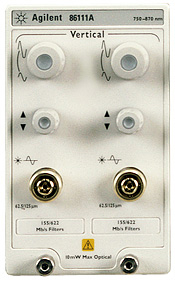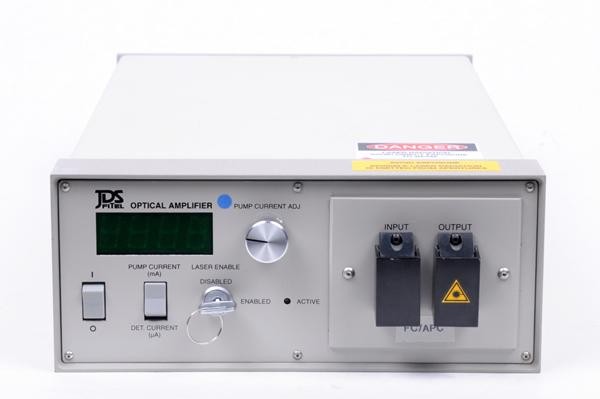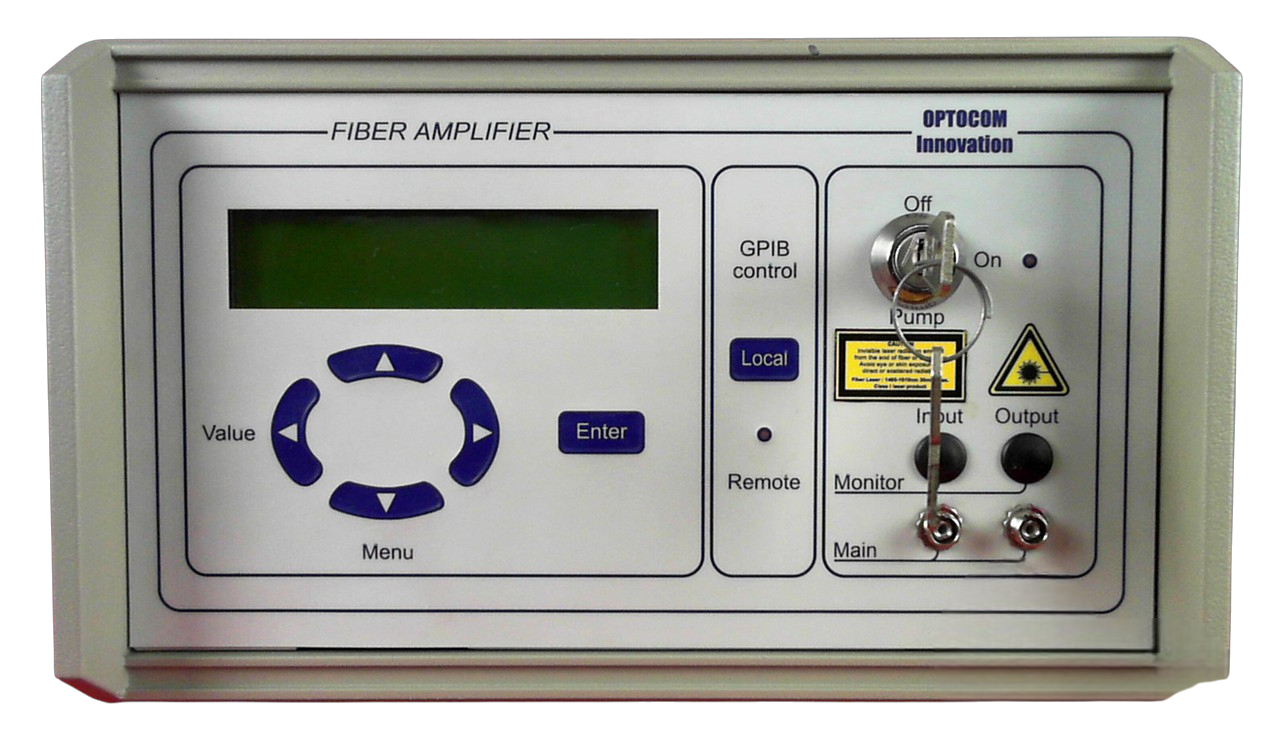
JDSU MAP-200 Erbium-Doped Fiber Amplifier mEDFA-A1
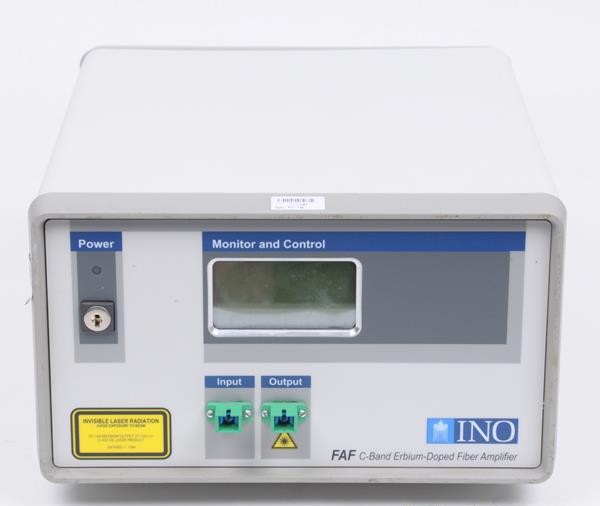
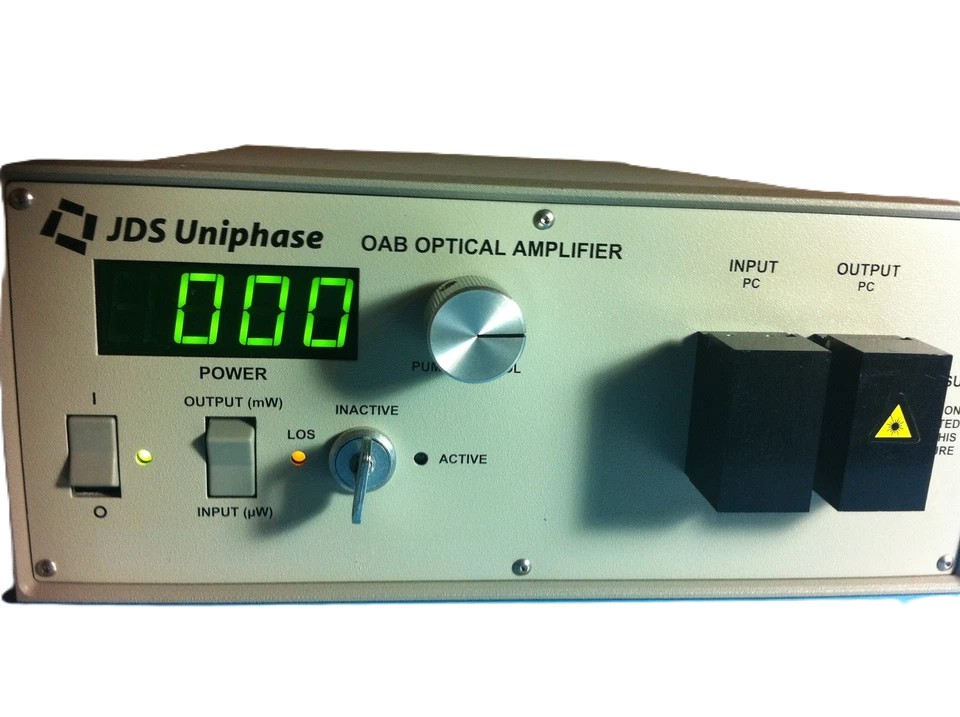
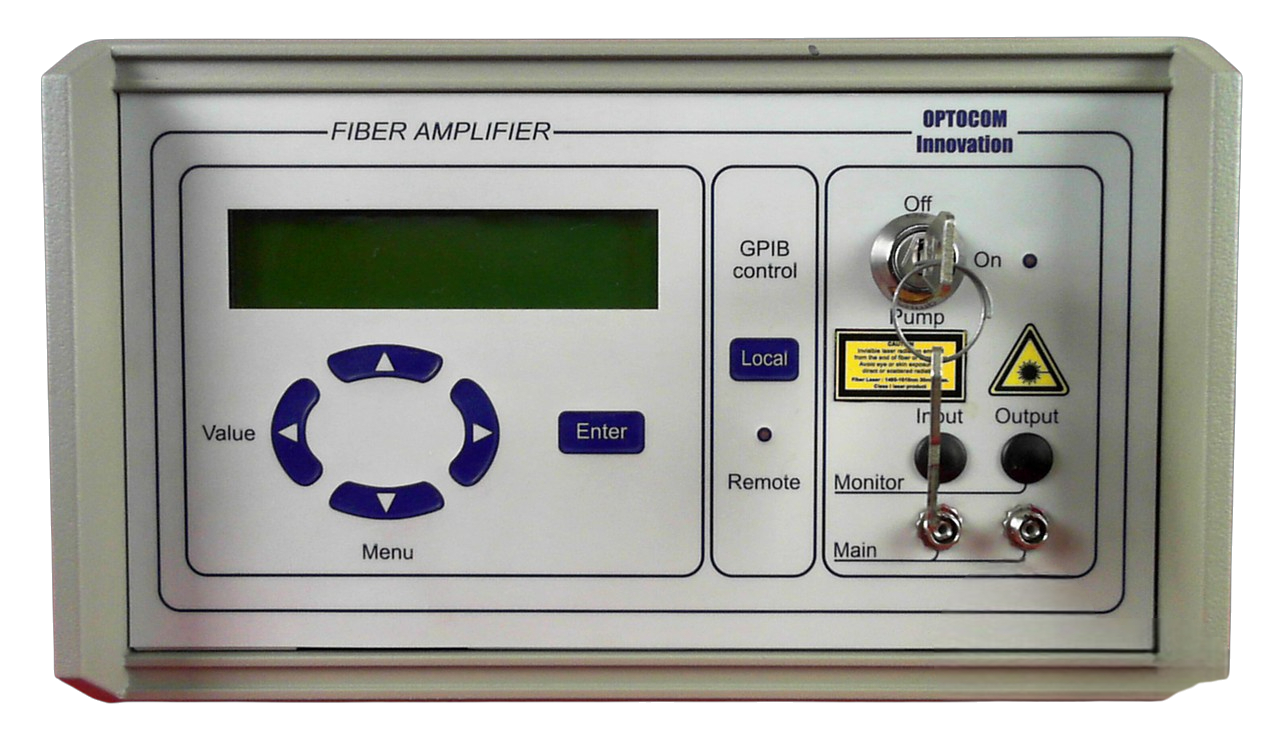
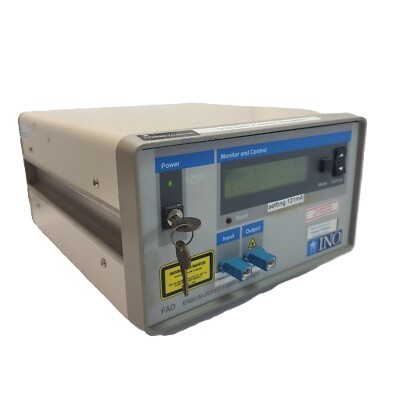
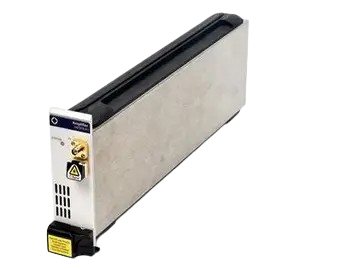
The JDSU MAP-200 mEDFA-A1 is an Erbium-Doped Fiber Amplifier (EDFA) module designed for use in the JDSU MAP-200 platform. It boosts optical signal power within the 1550 nm wavelength range, crucial for extending transmission distances and improving signal quality in optical communication systems.
- Model
- JDSU mEDFA-A1
- Calibration
- Available on request
- Price · starting from
- $2,480
- Status
- In stock
- RFQ ref
- mEDFA-A1
This unit
The JDSU MAP-200 mEDFA-A1 is an Erbium-Doped Fiber Amplifier module engineered for integration into the MAP-200 platform. It amplifies optical signals in the C-band and L-band, delivering configurable gain, low noise performance, and saturated output power up to 21 dBm. The module supports pre-amplifier, booster, in-line, and DWDM multichannel configurations, making it suitable for both single-channel SONET/SDH systems and dense wavelength division multiplexing transmission.
Auto gain and power control options streamline operation across diverse test and deployment scenarios. The mEDFA-A1 integrates with LXI-compliant MAP-200 mainframes via Ethernet connectivity and IVI drivers, enabling remote automation and front-panel control. Built-in monitoring and alarms provide real-time signal integrity oversight.
Compliance certifications include CE, CSA/UL/IEC61010-1, IEC 60825-1 (2002/2014) Class 3B, and 21 CFR 1040.1, ensuring safe operation in laboratory, manufacturing, and field environments.
Technical Specifications
- Amplifier Type: Erbium-Doped Fiber Amplifier (EDFA)
- Operating Wavelength Range: C-band and L-band; models cover 1528 nm to 1565 nm
- Saturated Output Power: 14 dBm to 21 dBm
- Noise Figure: 3.5 dB to 3.7 dB
- Gain Flatness: Better than 1.4 dB to 2.0 dB
- Gain: High gain capabilities
- Control: Auto gain and power control options
Key Features
- Multiple configurations: pre-amp, booster, in-line, booster-high power, mid-span access booster, booster-DWDM, and low noise variants
- Single-channel and DWDM multichannel support
- Built-in monitoring and alarms
- Front-panel or remote control interface
- Fully compatible with LXI Class C requirements
Typical Applications
- DWDM transmission and multi-channel optical systems
- SONET/SDH single-channel amplification
- Optical Signal-to-Noise Ratio (OSNR) testing and characterization
- Sensitive signal amplification in automated test environments
- Power saturation recovery analysis
Compatibility & Integration
- Platform: JDSU MAP-200 (MAP-280, MAP-280R, MAP-230B, MAP-220C)
- Interface: LXI-compliant Ethernet with IVI driver support
- Certifications: CE, CSA/UL/IEC61010-1, IEC 60825-1 Class 3B, 21 CFR 1040.1
Specifications
| Parameter | Value |
|---|---|
| Power Range (dBm) | 14 dBm to 21 dBm output | Wavelength Range: 1528 nm to 1565 nm (C-band and L-band) |
JDSU mEDFA-A1 — Repair & Calibration Service
Aumictech offers NIST-traceable calibration and repair for the JDSU mEDFA-A1. Calibration covers gain at rated input power across the specified wavelength range, noise figure at rated gain setting, output power accuracy, gain flatness across the C-band or specified wavelength range, and polarization-dependent gain (PDG) where applicable. All calibrations ship with a NIST-traceable certificate. Turnaround is typically 1–3 business days after receipt.
Common JDSU mEDFA-A1 faults: pump laser diode degradation (gain drop, reduced output power), TEC failure causing thermal drift, optical isolator degradation, power supply failure. The most common failure on any EDFA is pump laser diode degradation. Secondary faults include TEC failure causing thermal runaway, optical isolator degradation, and power supply failure.
JDSU mEDFA-A1 price
This JDSU mEDFA-A1 is listed at $2,480. Calibration is available separately from $450. Contact us for volume pricing or if you need multiple units.
JDSU mEDFA-A1 calibration cost
NIST-traceable calibration for the JDSU mEDFA-A1 is $450 (standard — pass/fail certificate and calibration sticker) or $650 (full measured data at every test point, reference standards documented, traceability chain included). Calibration for this instrument covers gain at rated input power across the specified wavelength range, noise figure at rated gain setting, output power accuracy, gain flatness across the C-band or specified wavelength range, and polarization-dependent gain (PDG) where applicable. Turnaround is 1 to 3 business days after receipt. See full calibration details →